
When we moved to the Silver Coast we had the enormous good fortune to land in a village lavishly supplied with dogs. Even better, golden retrievers were already wildly overrepresented, even before Hannah, Walter and Arlo arrived to distort the figures further.
Our neighbour has a golden retriever called Afonso. Her English is excellent, yet she refers to Afonso barkling every time we walk past. I think this is so charming I don’t correct her. She has apparently decided, not unreasonably, that Afonso barkles. An eminently suitable word for a dog displaying fury at one end and enthusiastic delight at the other.
We now tell Arlo and Walter to stop barkling. Linguistically it’s a triumph even if compliance is poor. To my ears, our neighbour’s creative distortion of the English language is a small, accidental triumph. She reached for the word she thought was right.
Barkle does something that bark never can. A bark is a single event, or a series of single events. Barkle is an altogether more rounded action: the grumbling, the rumbling, the tail-wagging outbursts. It describes an exuberant golden retriever far better than anything in the dictionary.
English used to build verbs like this all the time. Add -le and you had the same small thing happening over and over. A spark that keeps going sparkles. A pig that grunts repeatedly is gruntling (we kept disgruntled and forgot the pig). Somewhere along the way, the habit faded. Marta, whose English is a good deal better than my Portuguese, simply picked up an old custom.

Not sure what the collective noun might be. An exuberance of golden retrievers? A barkling of goldens perhaps. Afonso centre stage
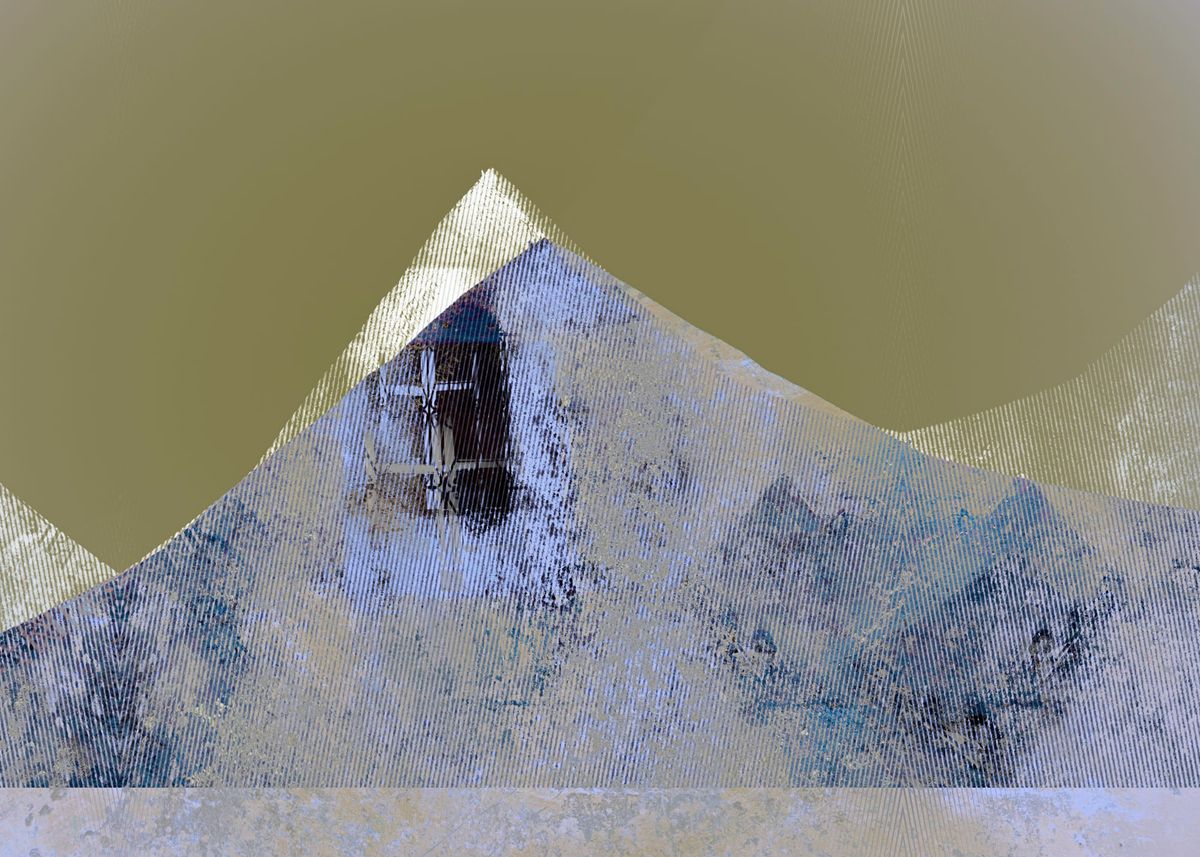
We blunder through life fondly imagining we are in control. The futility of that belief was hammered home to me in January, when our home got carried away by a freak storm. It is also true when it comes to creativity.
We rock up at a mist-shrouded landscape with a specific intention. Perhaps we have decided on a certain tonal balance or sense of melancholy. And then we press the shutter, and reality intervenes and the mistakes arrive. The blur is not the right kind of blur. The blend modes are misbehaving. The comfortable fallback of shifting the white balance mid-sequence produces a result that is neither here nor there. The silvery veil has gone. What we see on the back of the camera is more akin to a smudge of grey laundry with fluorescent pink highlights.
Now, nine times out of ten, a mistake is a mistake, and there is no point in trying to flatter ourselves into thinking it can ever be anything more. Most of them go in the bin – as well they should. It's also true that the intended successful image can often be a sterile thing, a mere confirmation of what we already knew. But just occasionally, a mistake shows you something you wouldn’t have found on purpose. An invitation to look at things sideways.
A visual barkle perhaps. Perhaps the skill lies in deciding which one of the ten failures is the barkle in wolf's clothing. The image that is ready to be taken on a different journey. The creative process at work, recognising the value of the mistake before somebody sensible corrects it.
Meanwhile, Arlo and Walter are still beta testing their skills; their command of the Portuguese language remains sketchy at best. They have established, however, that a barkle delivered at three in the morning carries considerably more weight than one delivered during dinner.