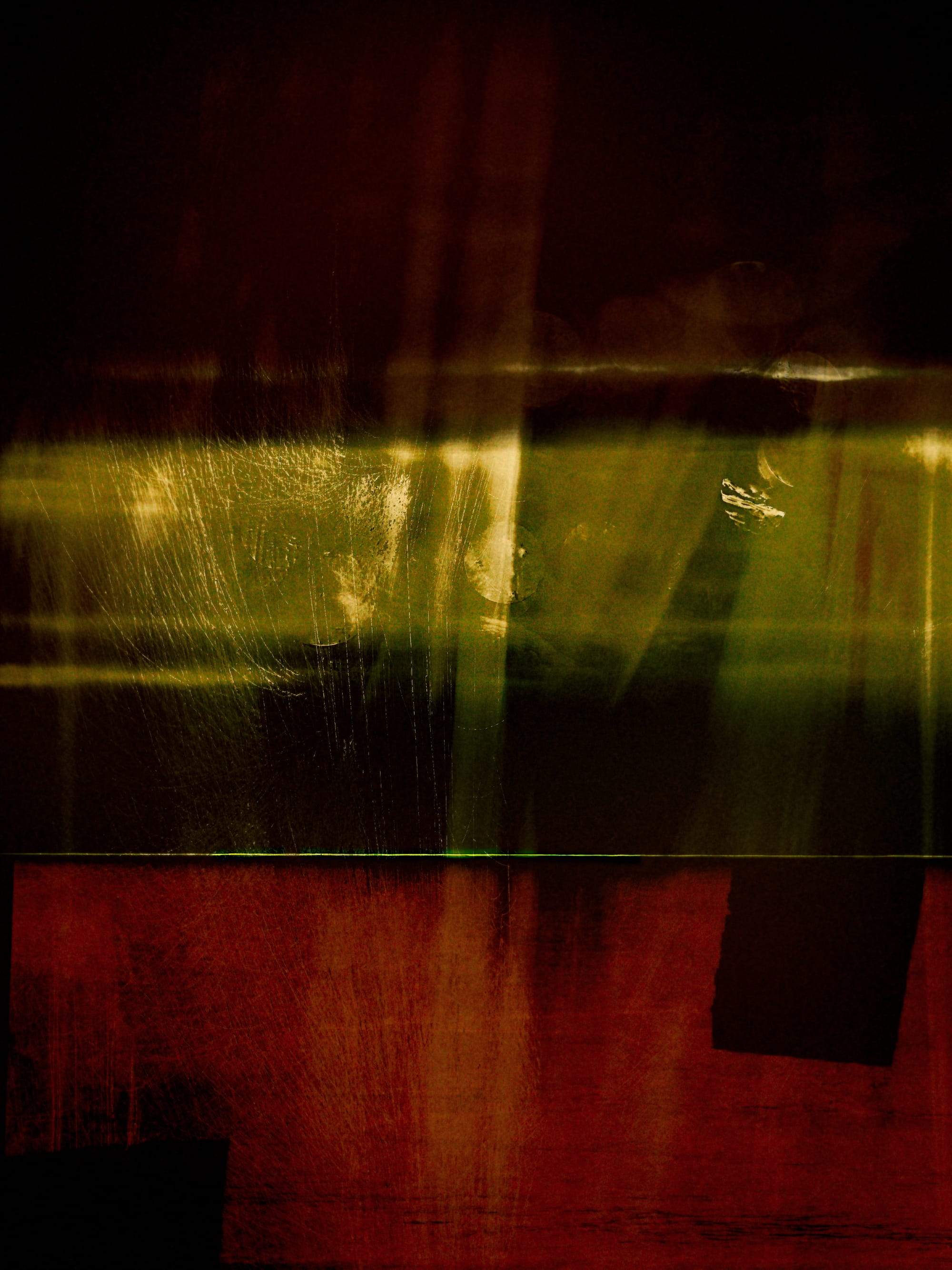
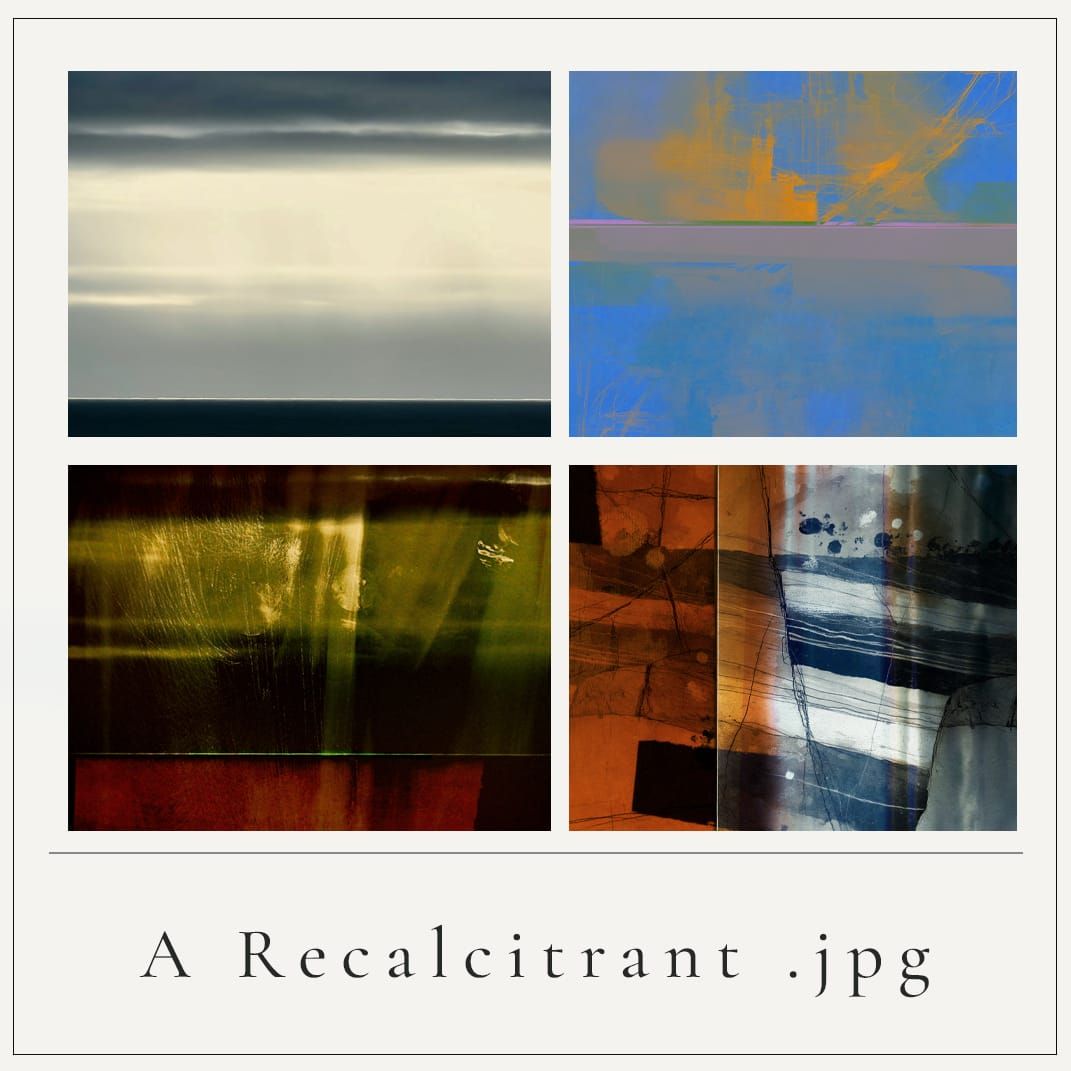
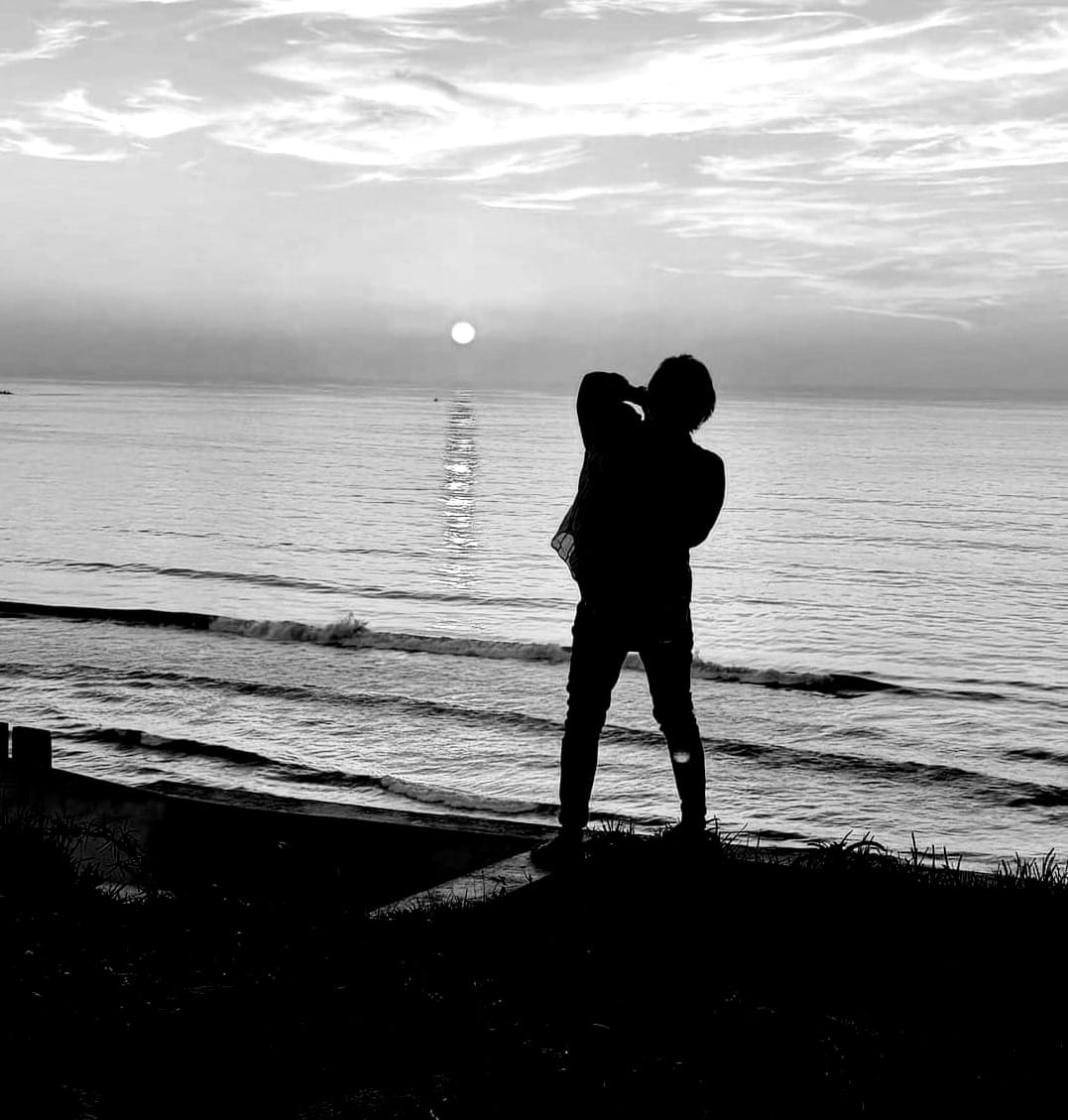
When is a photograph not a photograph? I suppose conventional wisdom might say it's no longer a photograph when it no longer presents a single, stable instant as evidence. Which pretty much describes everything I’ve ever taken since 2008. Apart from the current sunset obsession, obviously.
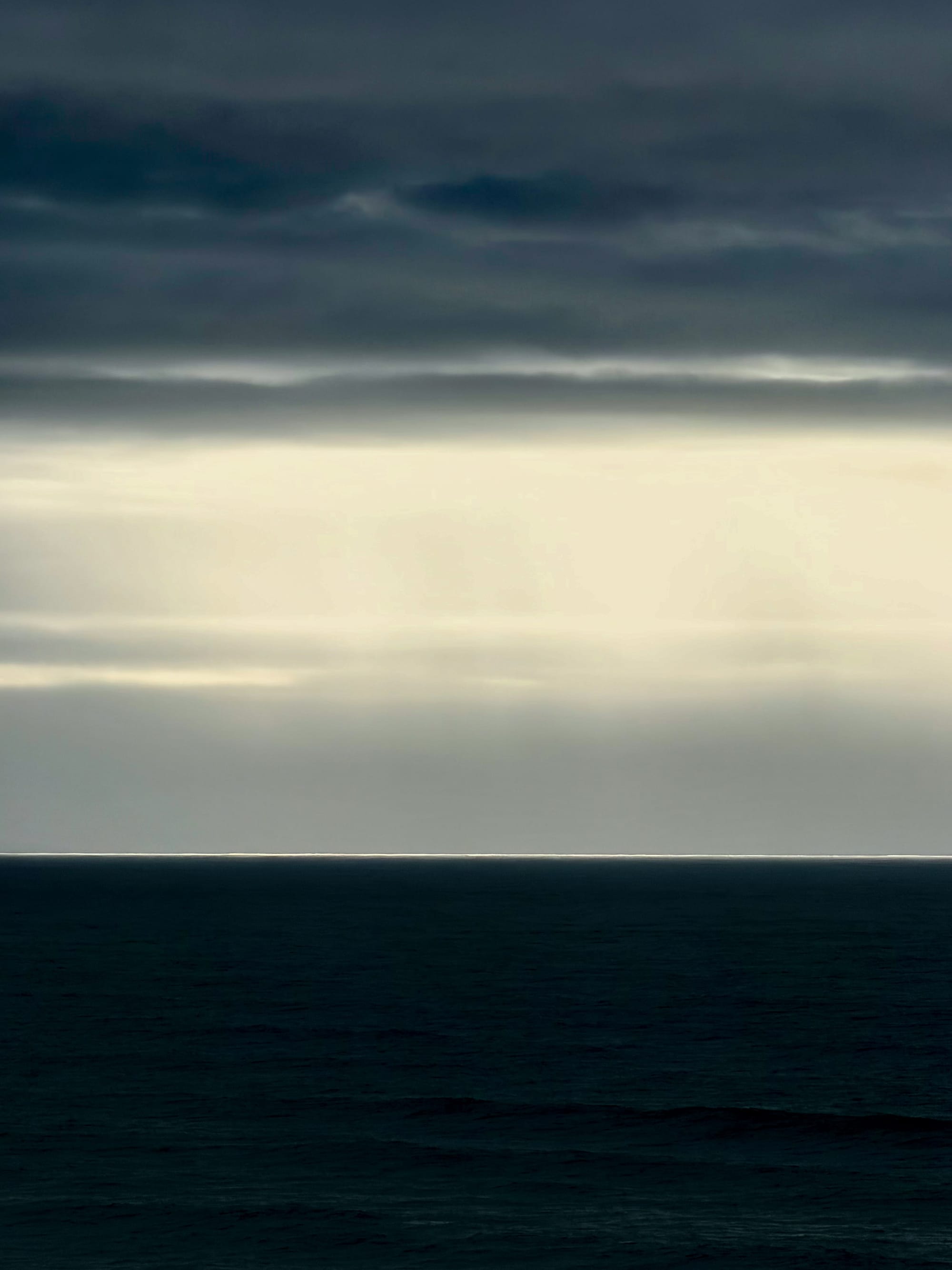
Is it even a question worth contemplating? I am not really that invested in names and labels. Useful from the perspective of being able to identify the ‘how’. Doesn’t really tell the viewer much about the ‘why’.
My woolly philosophy subscribes to the belief that an image need not identify itself as a photograph, an abstraction, a landscape, an etching or a cross-eyed labrador called Bernard. In fact, I quite enjoy the confusion when an image exists beyond the category assigned to it
I realise that having allowed Bernard to wander into the essay, he may prove difficult to remove.
At what point, working on a photographic surface, do I stop thinking about what the original image showed? There is no easy answer, and I don’t really think it matters. For me, the digital file is nothing more than a springboard to other options.
When the subject is no longer legible, I don’t feel I have lost anything particularly important. It becomes an interpretation, a way of saying what I thought about the thing. I guess it could be argued that the meaning, if we insist on having one, gets harder to find once there is no windblown tree standing by to tell the viewer what they are supposed to feel. Sometimes when I’m feeling devilish, I leave enough of the tree in there. Sometimes I do not.
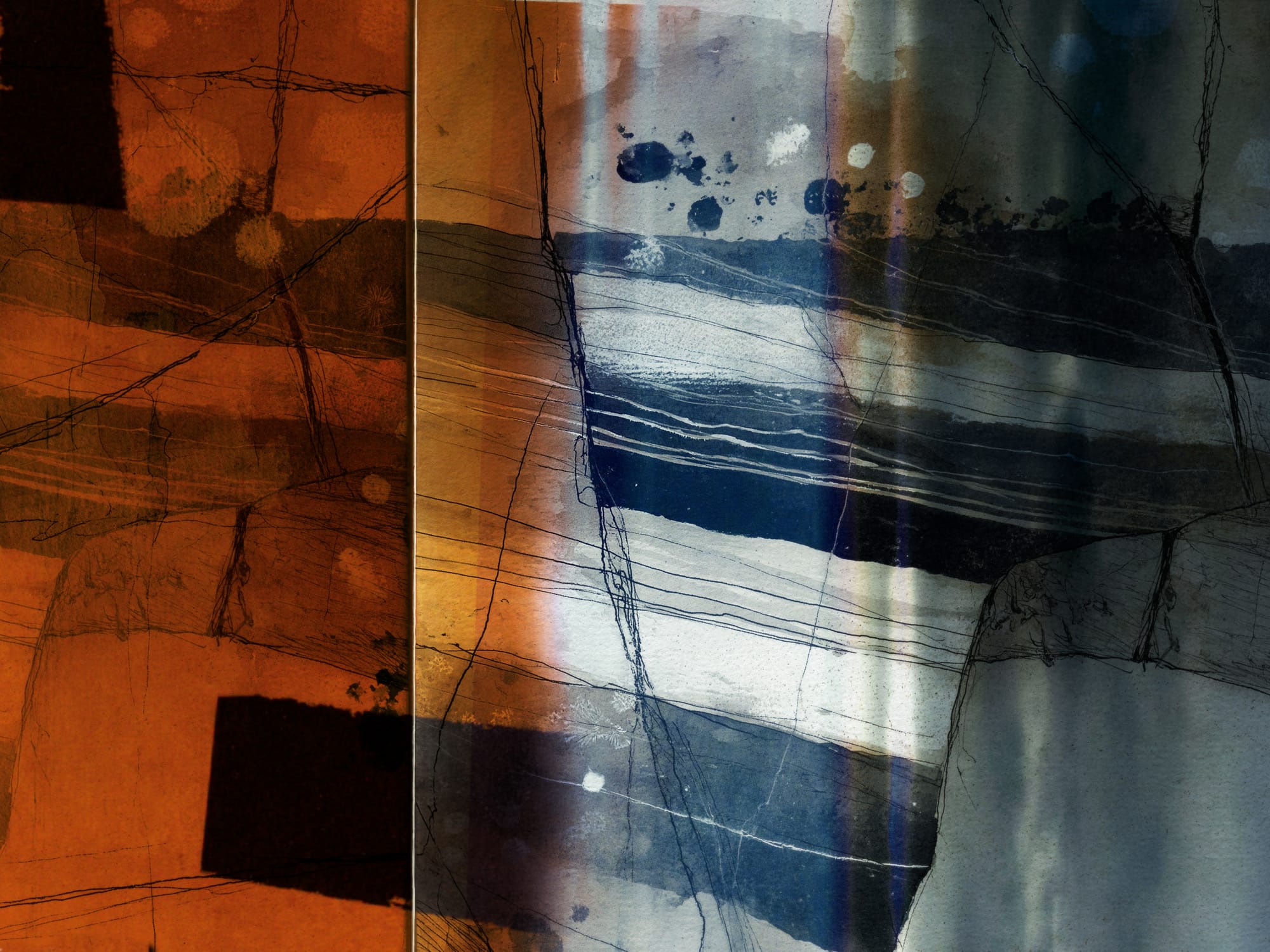
No previsualisation for me at all, I’m afraid to say. The ideas shift and meander; each decision informs the next, and at some point it feels as if the image is leading the way with ideas of its own, and I am simply trotting along dutifully in the shadows somewhere.
That makes the process sound a lot more mystical than it actually is, although I’m certainly not averse to a goodly helping of anthropomorphism. Who doesn’t love a dustbin sulking on a wet pavement? Chimney pots whispering across the rooftops.
In 1944, Fritz Heider and Marianne Simmel cut shapes out of cardboard, moved them around on a sheet of glass, and filmed them. A big triangle, a small triangle, a circle, and a rectangle with a door that opened and shut. They showed the film to people and asked them to write down what happened. Nearly everyone interpreted the movements as actions of animate beings and most wrote down a story with feelings in it.
So if the reflex happens to people watching animated paper triangles, I probably don’t need to feel too badly about thinking my images are navigating me through the myriad different options I could choose in Photoshop. The giveaway is that it only ever runs one way. I have never once described the work as compliant or grateful. It sulks quite a lot. It stalls and digs its heels in. Or maybe that’s just Bernard’s behaviour inveigling its way into the essay.
It is a curious fact that the temperament I lend it is always that of something that will not do as it is told, which probably says rather more about me than about a recalcitrant .jpg.
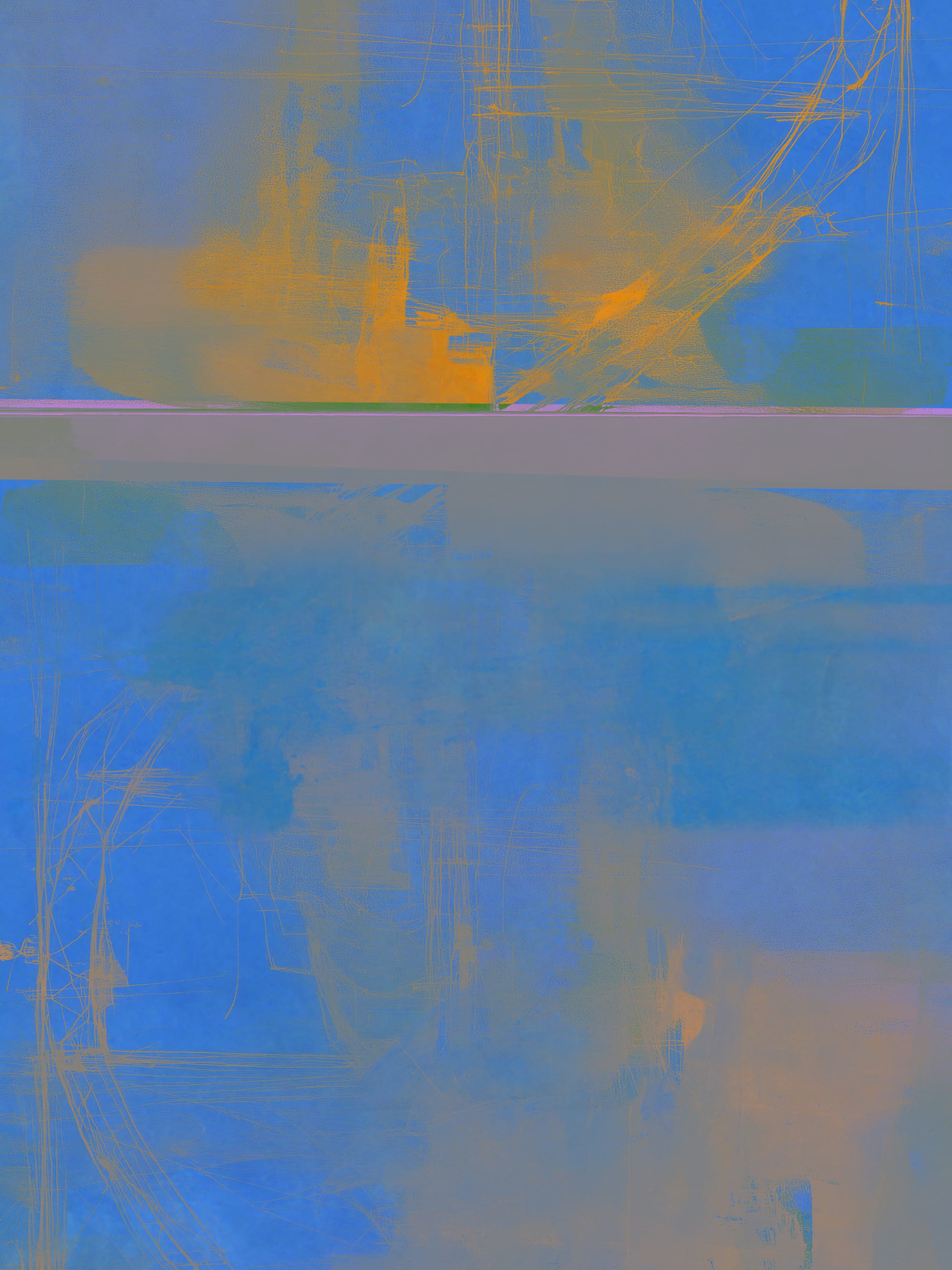
I think what is actually going on is not quite so fanciful. In that almost meditative state of flow, when concentration is total, I can make a whole succession of decisions without feeling that I have consciously considered any of them. I am making them, obviously. But from somewhere inside that absorption, it is easy to feel that the image is getting on with things by itself. Every decision I make is predicated on what the last one gave me. My hands are on the steering wheel, but the guidance is instinctive.
So when is a photograph not a photograph? I seem to have spent rather a lot of words avoiding the question. I can usually tell you how an image began, but somewhere along the way I stop comparing what I am doing to the ideas I had when I was making the original. The tree – if it exists – may survive. Or just as likely – it may disappear under layers of shape, colour, ink, wax, collage and anything that fails to get out of the way. By then, the image is also a record of what happened while I was making it. There are decisions in there that I could readily explain, and plenty of others I absolutely couldn’t. The tree got the whole thing started and was thanked for it at the time. I see no reason to consult it about the ending.