
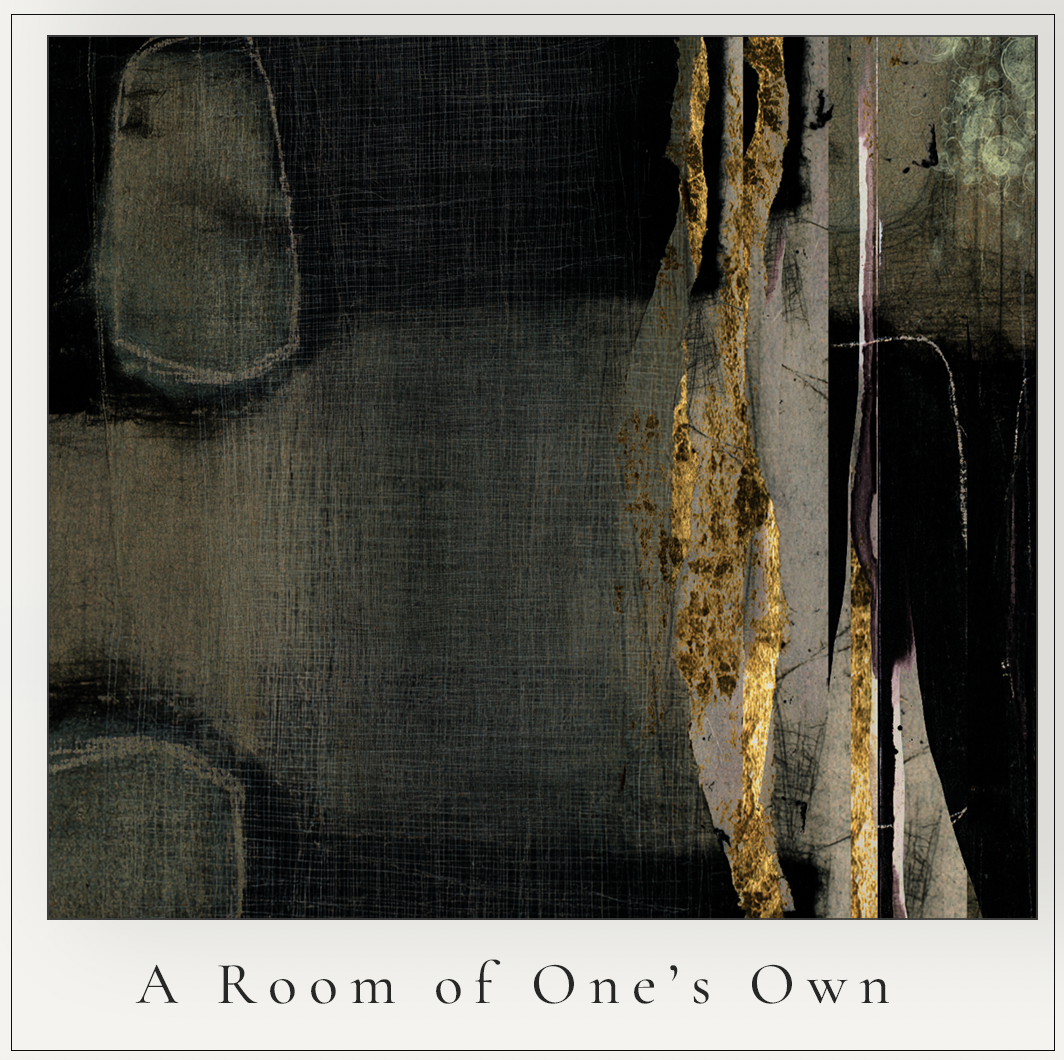

(with adjustable line spacing)
For three days this week I worked as an unpaid interior decorator for a piece of note-taking software. I have been customising something so utilitarian that nobody but Arlo and me will ever see it. And he doesn’t much care.
Where does it come from, I wonder? This compulsion to meddle and interfere. We do it to our homes, our gardens, our windowsills, things we see every day. Digital pottering and rearranging is really not so different. Is it?
The physical part of my process is on hold until the builders have done their bit, so I have been developing a space that I hope will feed and nourish my work while enjoying what was mostly a reasonably agreeable kind of challenge.
That space is my neglected Obsidian vault. Obsidian is a note-taking application that lets you build your own interconnected library of ideas, research, images and writing, all stored as files on your computer. Rather than organising everything into rigid folders, it lets you link thoughts and discoveries.
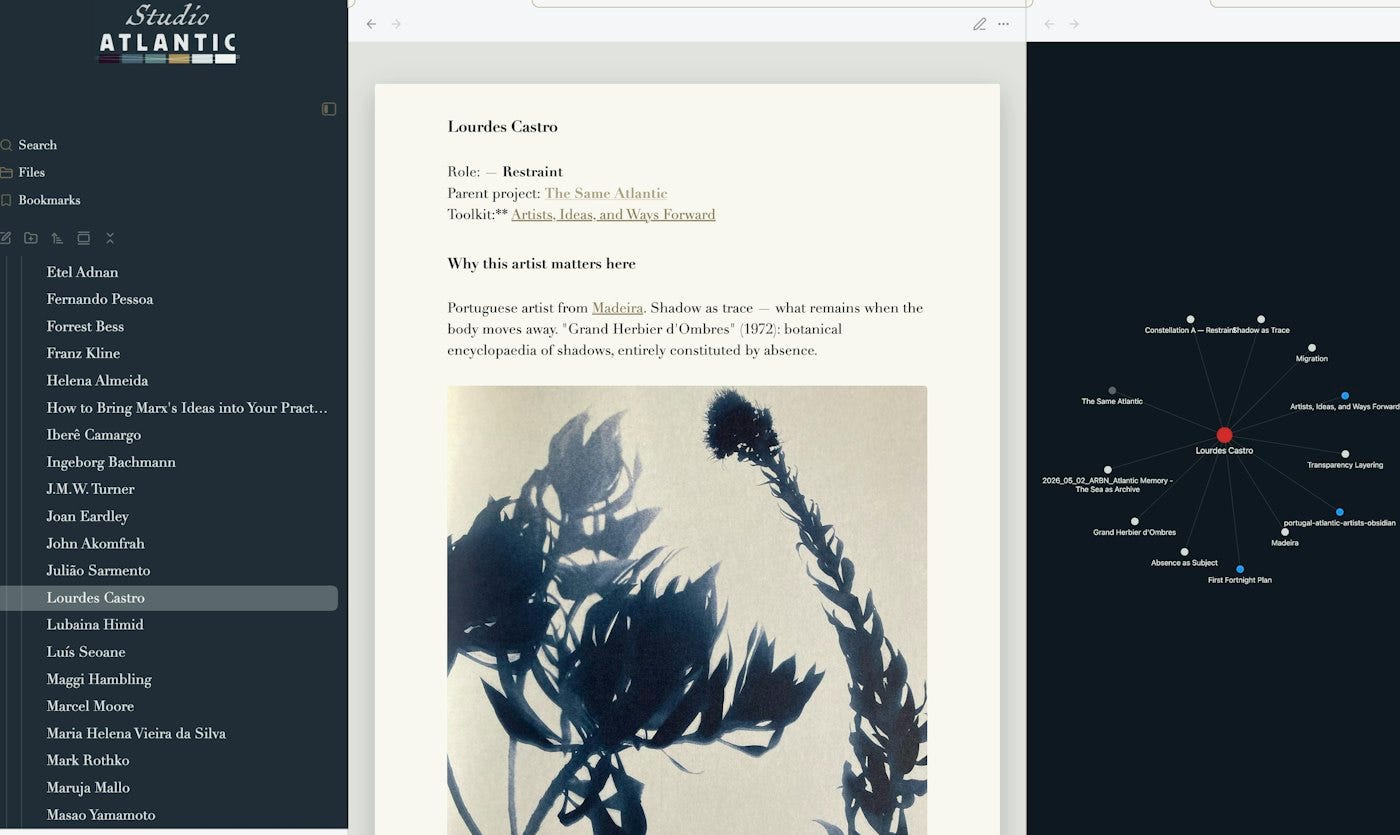
When something looks off, I dial it up or dial it down — I offer up a few more lines of carefully crafted CSS snippety bits (the technical term), and the fix is immediate. Or if it isn’t, I tweak it some more until it is.
Maybe that is the attraction. In art, the solution is usually not that neat. We all know we can spend a day in Lightroom or Photoshop or with something on the studio table, and all we are left with is a much clearer understanding of why it should have gone in the trash.
Perhaps it’s an ego thing. A need to leave my mark on everything I touch. However, I view it as no different to the people who invest an inordinate amount of care in choosing a particularly distinguished Moleskine journal. A suitably sober dark cover. An elastic strap to stop the precious contents from escaping. Paper in an expensive shade of almost white. And the quiet authority of something that will accompany an artist through a period of great significance.
Regretfully, that avenue is closed to me; arthritic fingers make my handwriting more illegible than most of my artwork. Instead, I choose to save my inspirational clips on my computer. I have been collecting ideas and things to look at for years. Graphic art, paintings, thought-provoking odds and ends are now scattered across many different filing systems. Pinterest (obvs). Folders on the desktop. Folders within folders within folders on the desktop. It’s not unheard of for me to come across something revelatory, only to discover I’d already saved it in four other places. It’s not just about the handwriting then.
I was introduced to Obsidian by Doug Chinnery a few years ago. I took to it with great glee until the frustration of working in an environment aesthetically akin to terminal brought my obsessive peculiarities to the fore. A winding trajectory brings me back. I’ve discovered I can tweak. I can personalise. But more than that, I can make canvases and mood boards.

How Obsidian looks straight out of the box.
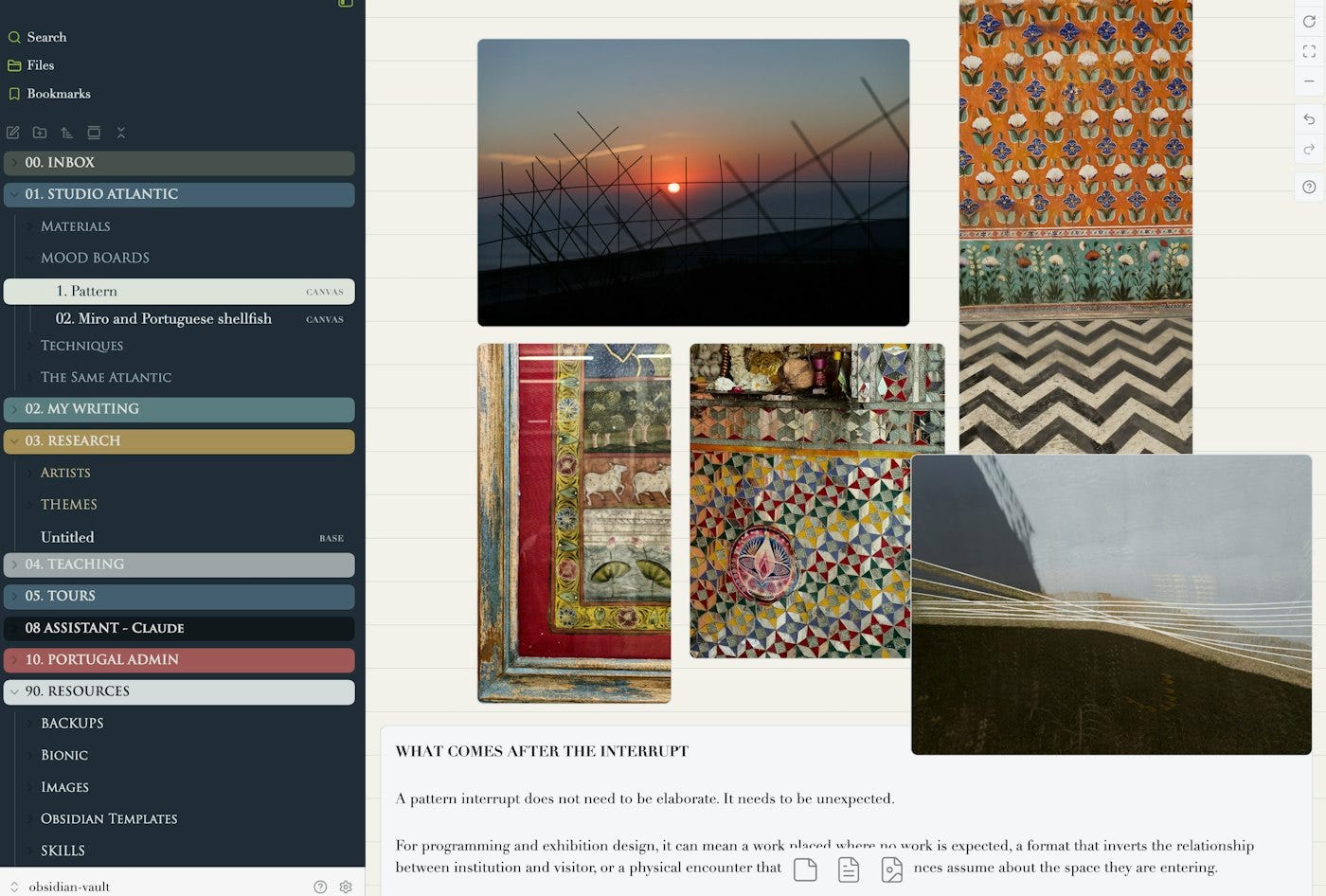
Leaving aside the very real issue of ‘final and definitive’ folders and bookmarks scattered over an area the size of Wales, the big advantage I see with my mood board is that it involves choosing what comes into view together. I control the arrangement, and the arrangement can reveal something I hadn’t anticipated—a colour recurring across unrelated works, a tension, an attraction I can’t yet explain.
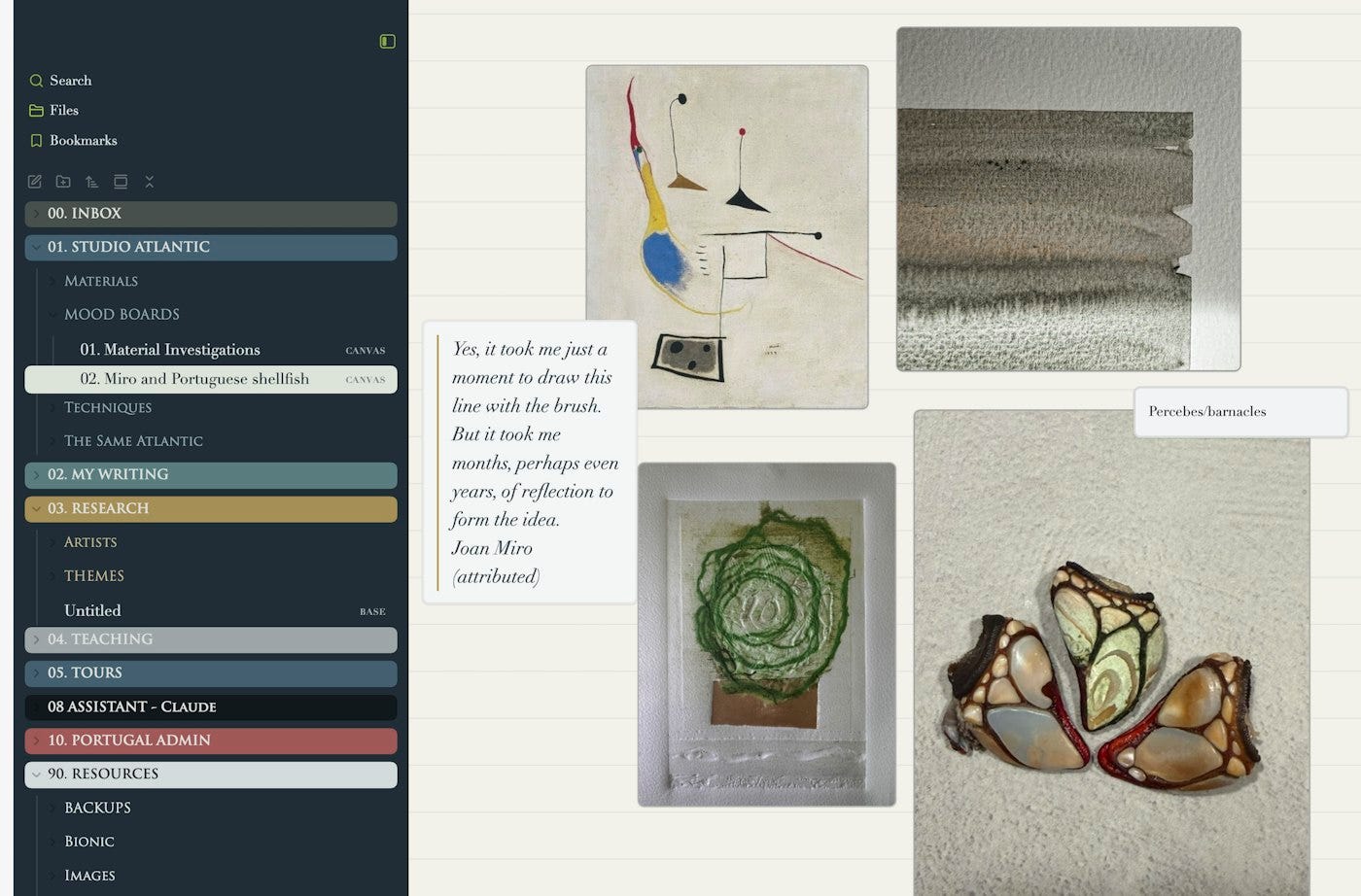
I am simply leaning into my inner Morandi; he famously spent far longer arranging his bottles than painting them. He told an interviewer that it took him weeks to decide which particular arrangement of bottles would sit best on top of a certain tablecloth.
Painters grind pigments, stretch canvases and lay out palettes with similar dedication. For many makers, dedicated and obsessive preparation is part of the work.
I think the issue is that the eye doesn’t clock off at 5pm. As artists and photographers, we learn to see. The fact that we cannot easily un-see is something to be treasured and also a damned nuisance. The clock on the mantelpiece, not quite central, is an easy fix. Hours spent on .css and margins and kerning are hours that a less obsessive person would have spent elsewhere.
The tweaking and the tinkering and the compulsive contorting lean on similar faculties used in creativity. We notice imbalance and adjust relationships. We sense when something is not quite right. These are the same acts of judgement. Whether or not my Obsidian vault warranted quite so many hours of intense scrutiny is a different and slightly less comfortable question.
Arlo is my only witness, and he has yet to comment.
FOOTNOTE
I have just discovered that it looks every bit as pedestrian as it ever did on my iPhone. Damn! The refurbishment has not migrated in the way I had hoped. But the desktop version is a triumph. It is done. And I will leave it alone.