
The single frame was never the point.
New York, 2011. A hungry gathering of students after a gruelling day trying to unite light, colour and gesture into something that might earn an approving grunt from Jay Maisel. Ten of us round a table, mostly professional photographers. I had advanced since my first workshop with Jay, but I was still every inch a pretender, still in thrall to Flickr, where everything is a 'great capture!!!' and the likes get doled out like jelly beans. An instant sugar rush but not any meaningful kind of nourishment.
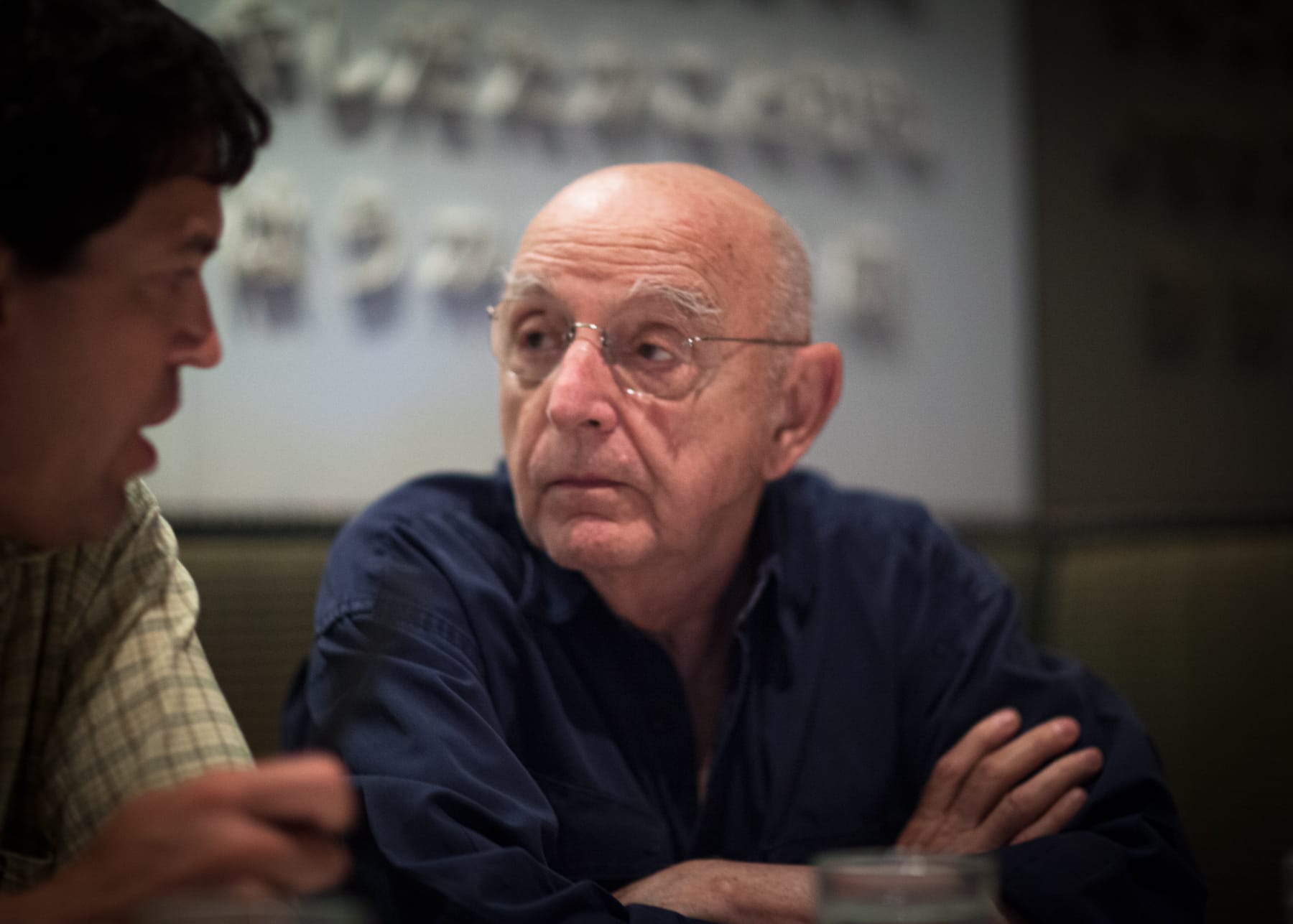
Duane Michals was also at that table. His wit was quick and dry, performative rather than warm, the sort that made people laugh and then left them faintly unsure whether they had been included or exposed.
He had spoken to us as a group earlier, and, such was my ignorance, I had no idea who he was. He had not witnessed my floundering, but it didn't matter; his eyes were the kind that didn't need to. They were piercing in the literal sense: pale, direct, unmoving, and they seemed to look through whatever surface a person was offering and register what was actually there. He was perfectly courteous. I was perfectly terrified.
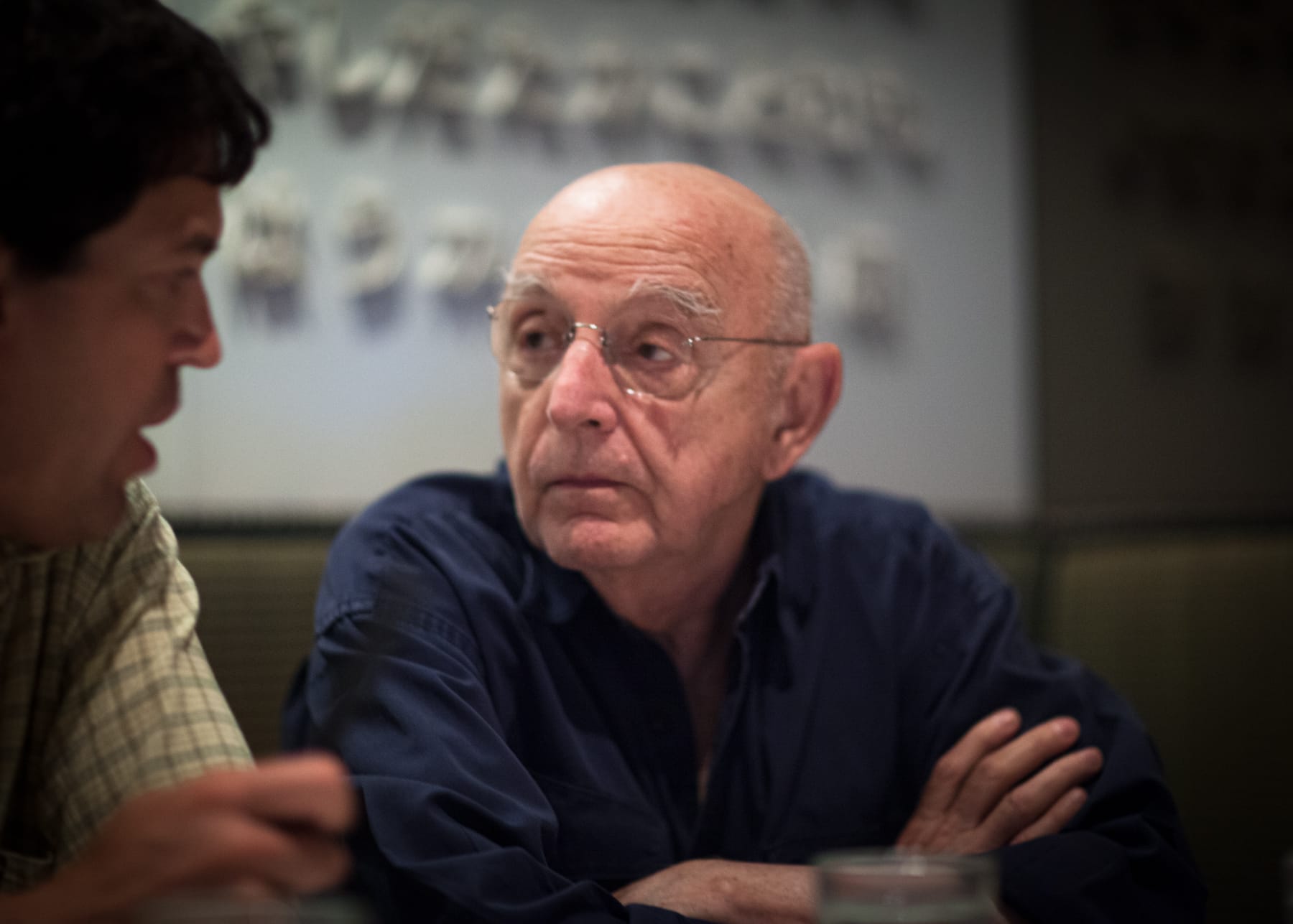
Two artists died during the second week of June. On the face of it they had almost nothing in common. Duane Michals died on the 10th in New York at the age of 94, and David Hockney died a day later in London at the age of 88.
Two creative men, a continent apart, pursuing their ideas over many decades. The overlap was far from obvious, but they did both spend time chipping away at the boundaries of photography.
Hockney's work is recognised the world over. He painted Californian swimming pools the colour of boiled sweets and his native Yorkshire landscape in vibrant green and yellow. Michals shot grainy black-and-white sequences about death and desire in borrowed rooms. There really is no obvious or ready-made reason to connect them. And yet...
For the longest time, photography's central tenet was based upon the single frame. One picture, one instance. The "decisive moment" that Cartier-Bresson instructed two generations of photographers to wait for, fingers hovering, until the shapes and gestures collide and the shutter clicks. This is where the entire romance of the medium supposedly resides. If you get it right, you have captured something truthful. If you miss it, it's gone forever.
They were both frustrated by the limitations in the single frame. Hockney argued that that was not how vision worked. And it's true - our eyes do not capture a rectangular shape in 1/125th of a second.
In the early 80s he started to create what he called joiners. He would take dozens or even hundreds of photographs of a scene — Polaroids at first, ordinary prints later — and assemble them into one large collage. His way of reintroducing the passage of time back into his photos was by building a visual representation of how our eyes and our brains process what we see.
'I mean, photography is all right if you don't mind looking at the world from the point of view of a paralysed cyclops – for a split second'. David Hockney
Michals' issues with photography were different. He wanted to talk about more abstract ideas. Desire, death, love, hope, despair. And none of those things could be readily conveyed in one frame. He had also been subjected to the idea that the silver gelatin perfection of the decisive moments was the ultimate goal and the only thing worth striving for.
Some people described Michals as a writer or a storyteller, yet he said simply, 'I am an expressionist, and by that I mean that I'm not a photographer or a writer or a painter or a tap dancer, but rather someone who expresses himself according to his needs.' Whatever he was, he began putting photographs together in sequences until his story emerged.
And then he started scrawling on the photographs themselves. Not neat captions, and certainly not explanations. He shared personal narratives and philosophical thoughts; his wry humour came through along with his biting wit. The handwriting served to put the human touch back into the image. But that was not the only reason it was there.
It was also about completion. The image, for Michals, was just the springboard. He said it himself, in the introduction to Real Dreams: 'I believe in the imagination. What I cannot see is infinitely more important than what I can see.'
Hockney stood slightly outside photography, picking it up and putting it down as the work required, one approach among many in his studio. Michals never really distanced himself from it in the same way. He continued his search for a way to make the photograph say more. Two very different temperaments pulling in opposite directions, but reaching the same conclusion: that the photograph is a construction, not an observed occurrence. They both rejected the boundary that had been drawn around what a photograph was supposedly allowed to do.
The cult of the single image is still alive and well, and it is certainly not only Cartier-Bresson's doing. The single-entry competition and the great number of POTY competitions that call for entries every year. Many do have sections for portfolios, but they are first and foremost about the single image. We are trained to think of the masterpiece as a single object that either works or does not, and to measure our progress by how many of those objects we can produce.
I admire the work of both men enormously. Collaging together a collection of images in one frame à la Pearblossom Hwy is now a fairly simple operation in Photoshop, at least technically. Obviously, when Hockney did it, it was not simple at all. There were both technical and perceptual hurdles to negotiate. Each small print had to be made, arranged and rearranged in an attempt to approximate the way our eyes take a view.
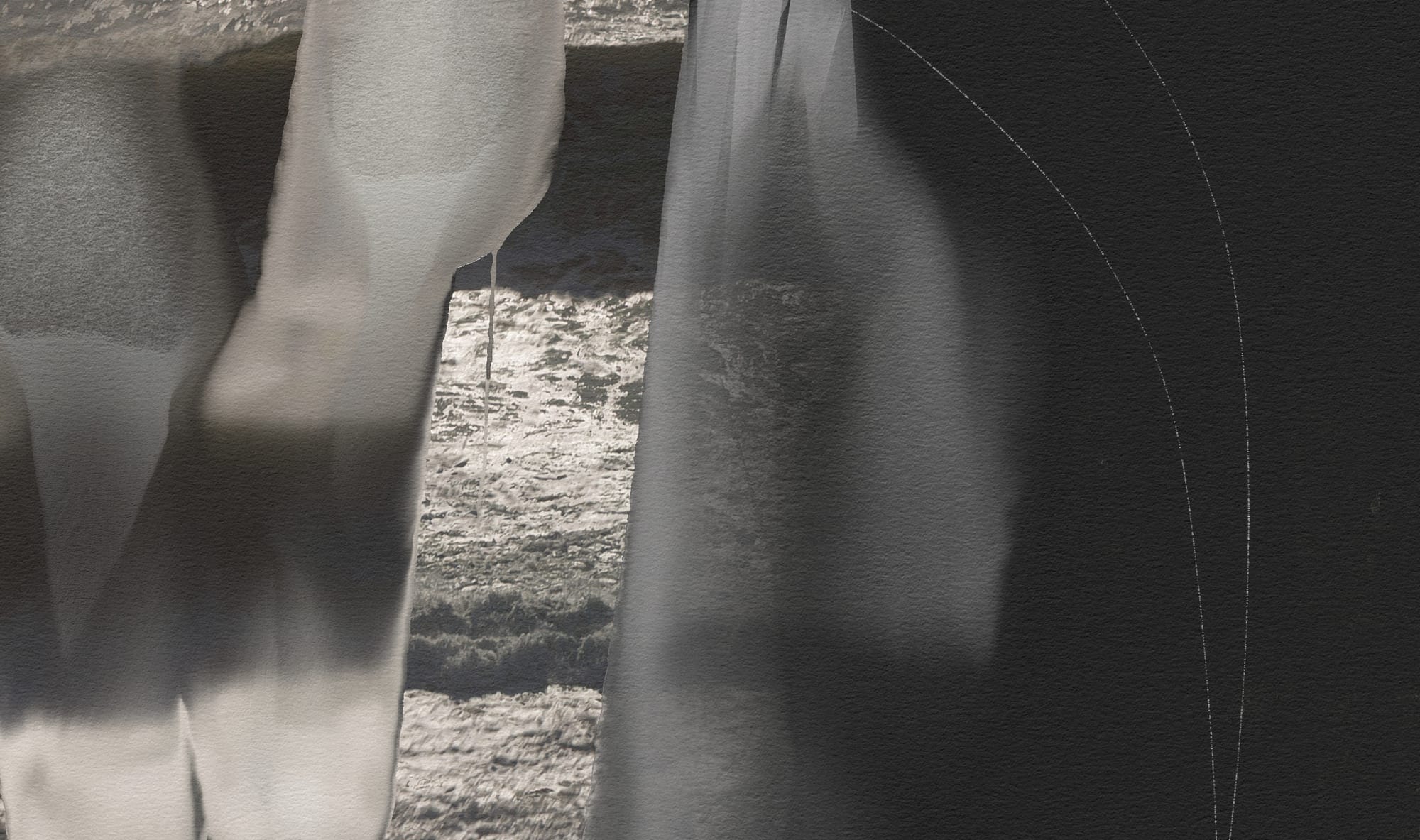
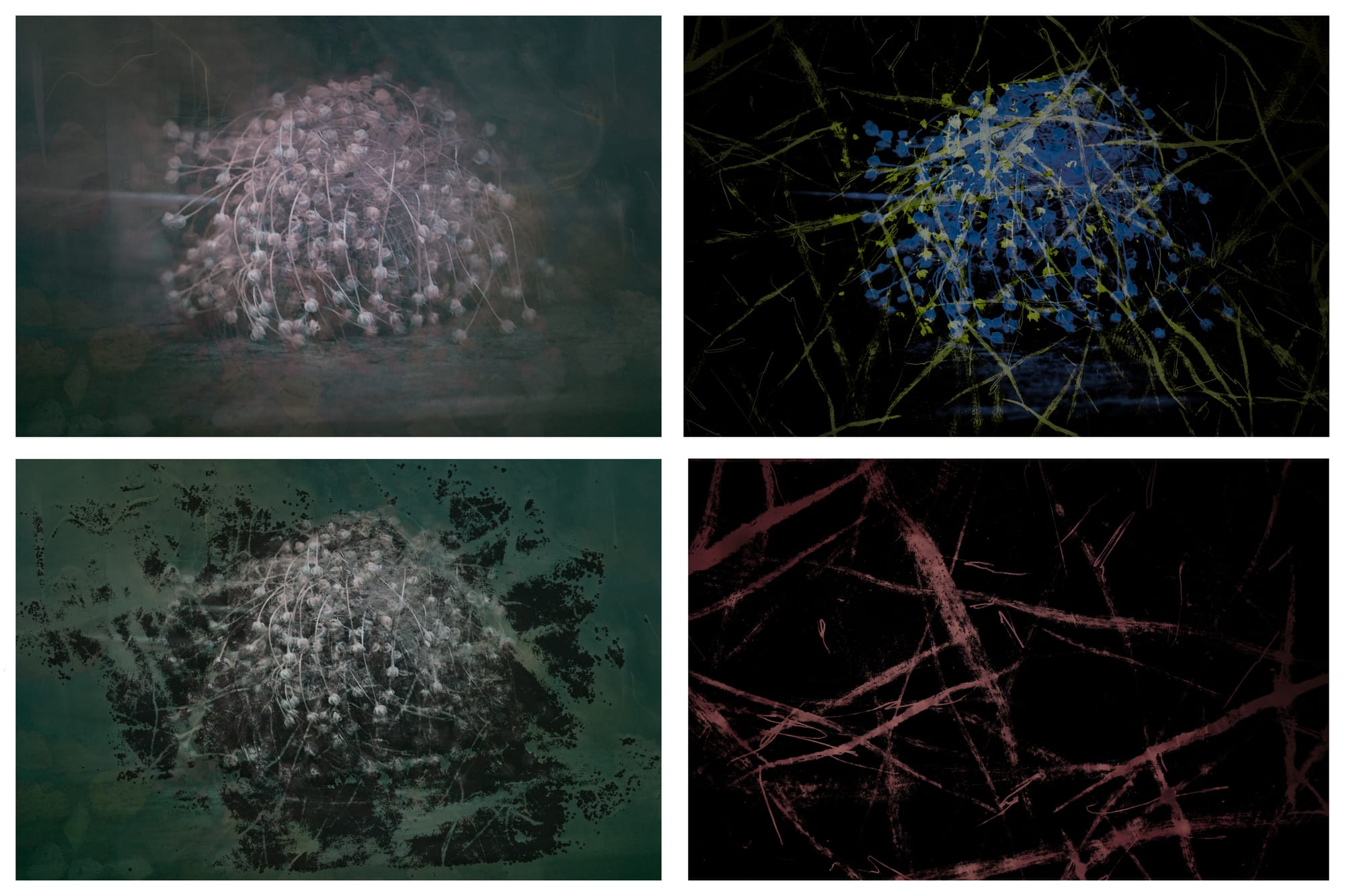
I am most interested in the permission behind it all: the idea that the photograph can be mangled and disfigured and still be valid. Mark-making on photographic images is surprisingly challenging, but it is much more aligned with my interests than collaging scraps of photographs.
The first time I made marks on one of my own prints, it felt frivolous. Gratuitous. The print was finished and should not be defaced. And I was about to do exactly that. I felt I had no authority to do so; that I had not earned the right. The marks were childish, indulgent, destructive. I put the idea aside for a long time.
What I am slowly coming to understand — through reading, through instruction, through research — is that permission is granted by observing. Through studying the works of artists who previously vandalised their surfaces and gaining insight into why they did so. Michals wrote on the print because the image alone could not say what he meant. Hockney shattered it into fragments because the single frame misrepresented his vision. Neither asked permission. Both had done so much looking that it wouldn't have occurred to them for one moment that photography had the authority to tell them what they could and couldn't do.
Some ideas simply won't fit into one photograph. Some inspirations are simply too large to exist entirely within a single frame. Hockney needed a grid of images to describe one afternoon with his mother. Michals needed a series of exposures and a paragraph to express his feelings about grief. The single picture is a wonderful thing. But it is a sentence, not the essay, and some thoughts need more.
This, I think, is what the two of them leave us with, set side by side this week. The print can legitimately be viewed as raw material. Wax, ink, paint, collage... none of them is an impertinent addition upon a sacred surface. They help the work continue to evolve. Many of us who came up through photography's traditional channels were trained to think of the print as a verdict. It isn't. We are free to take it and spin it whichever way we choose.
If I were seated next to Michals at that dinner table today, he might look at me and see someone who was not so obviously terrified. However, I think his piercing eyes would still defeat me. Because rightly or wrongly, I still feel like I'm on the verge of being rumbled. Age brings many things; the wrinkles don't much matter, the aching joints and the memory loss do. But at least I no longer care about being shown up for being a fraud.
If this is the kind of thinking you've been hungry for, you may also enjoy FYV — Find Your Voice — a small, friendly community of photographers pushing boundaries and leaving photographic dogma behind. If you have ever wondered how you might use your camera as a paintbrush to extend your creative thinking, come and take a look.
Two-week no-obligation free trial. Use VISION15 for 15% off annual membership.