
Storm Kristin barrelled up through our carefully selected stretch of the Silver Coast at the end of January 2026. It carried away our roof and a good deal of what was beneath it. It left us the remains of a building that was still ours on paper, but the wholesale destruction meant it could no longer be described as anything remotely resembling a home.
Storms were always part of the attraction. When we chose this coast, I wrote breezily about wanting a front-row seat to the untamed Atlantic's winter weather as well as its more obvious summertime charms. We got the front row. We had not expected the show to raise the roof – literally. Nothing like the force of Storm Kristin had been recorded in Portugal before: gusts of nearly 240 km/h; higher by some local accounts. I am in no position to argue.
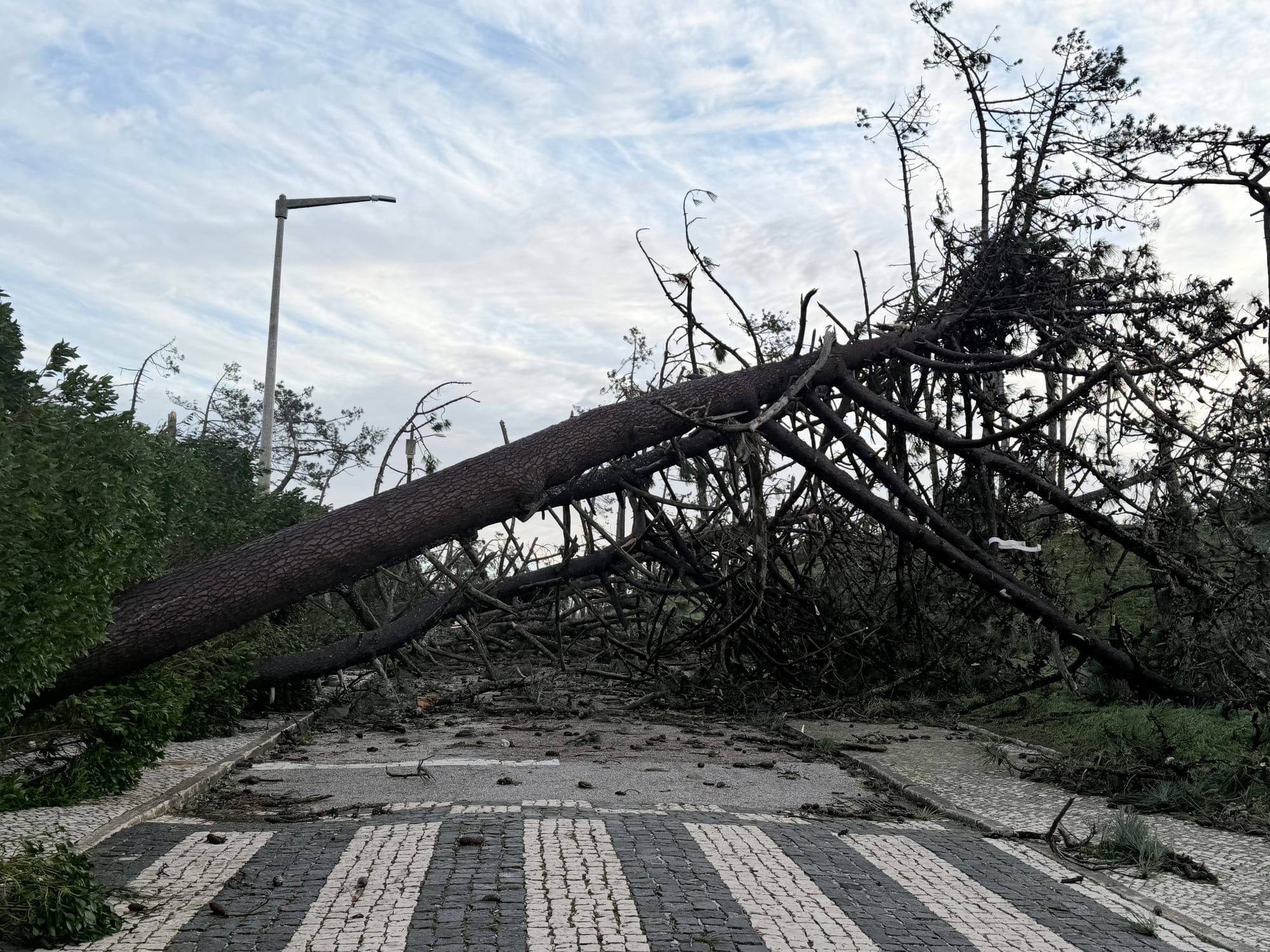
Before I get to our own corner of it, the scale of the tragedy needs acknowledging. Fourteen deaths have been attributed to Kristin. In the municipality of Leiria alone, around eight million trees were felled; snapped in half like toothpicks; more than half the pines in the district are gone, and whole stretches of forest with them. Factories, schools and railway lines were wrecked across one of Portugal's industrial heartlands, and the area suffered widespread power cuts with some villages still without services months after the storm. The government fast-tracked €2.5 billion in aid and asked Brussels for more. Damages were put at over €5 billion. Set against all that, one house is utterly insignificant, but it was our utter insignificance.
Grief is usually about mourning what you once had. This was not quite that. We were only half moved in when it happened. For a year we had been spending the odd week or two there while we tried to sell our house in England, and half of everything we owned had already made the crossing. So this was not the loss of a home, exactly, but of something else: a life in transit, caught mid-arrival.
Thankfully we were not there the night of the storm, because the workforce was due at seven the next morning. We had sat on our newly installed German sofa until about eight that evening, watching the dark ocean and celebrating finally being granted residency. We flirted with the idea of staying the night, decided against it, and drove to our small B&B in the next village.
We heard the storm, of course. It announced itself around 3.30am. Windows shook. Gates rattled. Things came crashing down around the village in the darkness. Sunrise showed us the extent of it. No power, obviously, nor much of anything else.
We walked most of the four miles to the house, picking our way over fallen trees, quietly confident – despite the overwhelming evidence to the contrary – that all would be well. As we reached our gate I recognised one of my coats wedged beneath it. A coat that had been hanging safely in the wardrobe the night before.
We opened the gate. The aforementioned German sofa was sitting at the bottom of the garden, having exited the house by way of the roof. Our bed was alongside. The garden was littered with our belongings, bedlinen dangled from the trees and glass was everywhere.
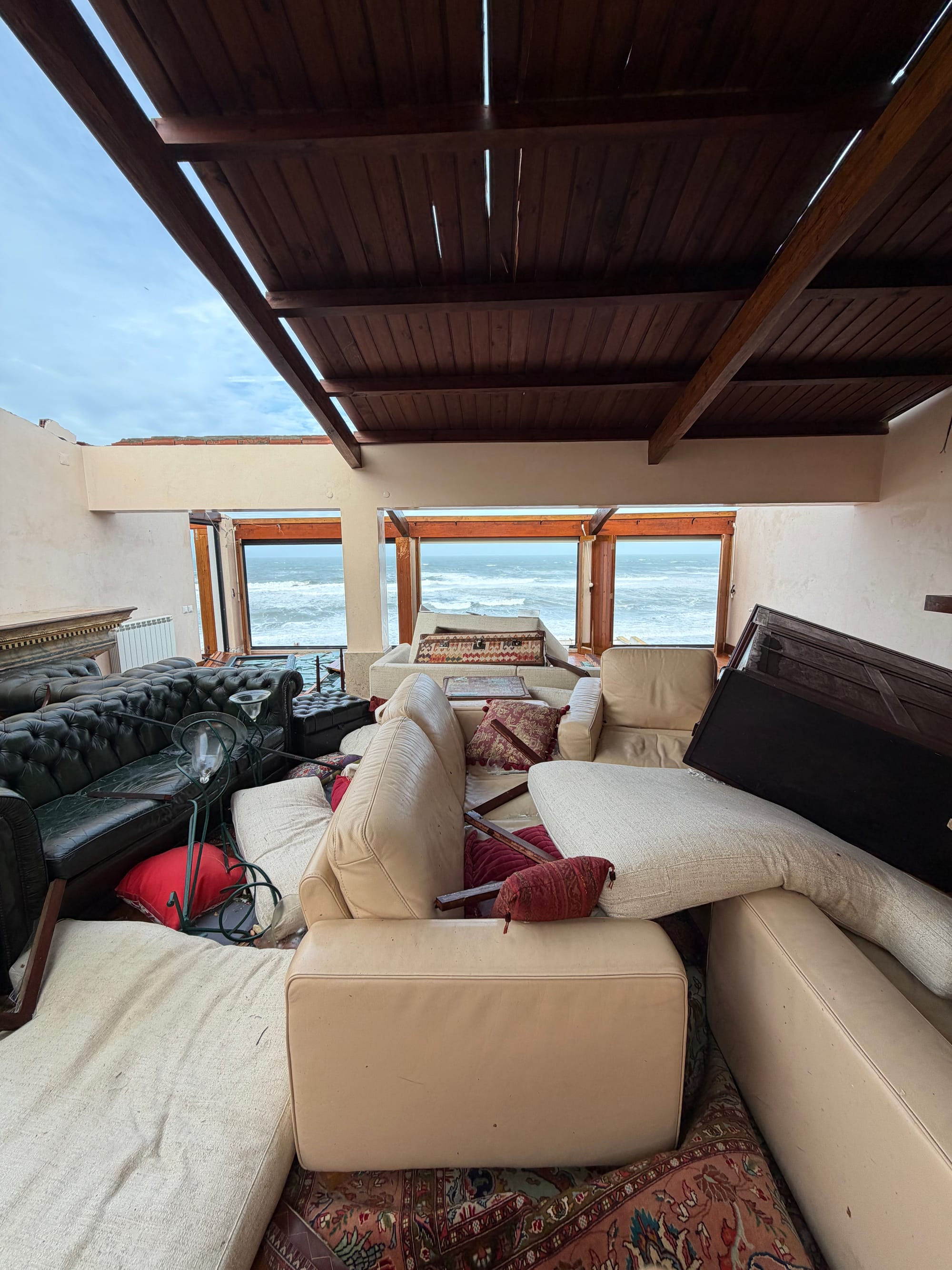
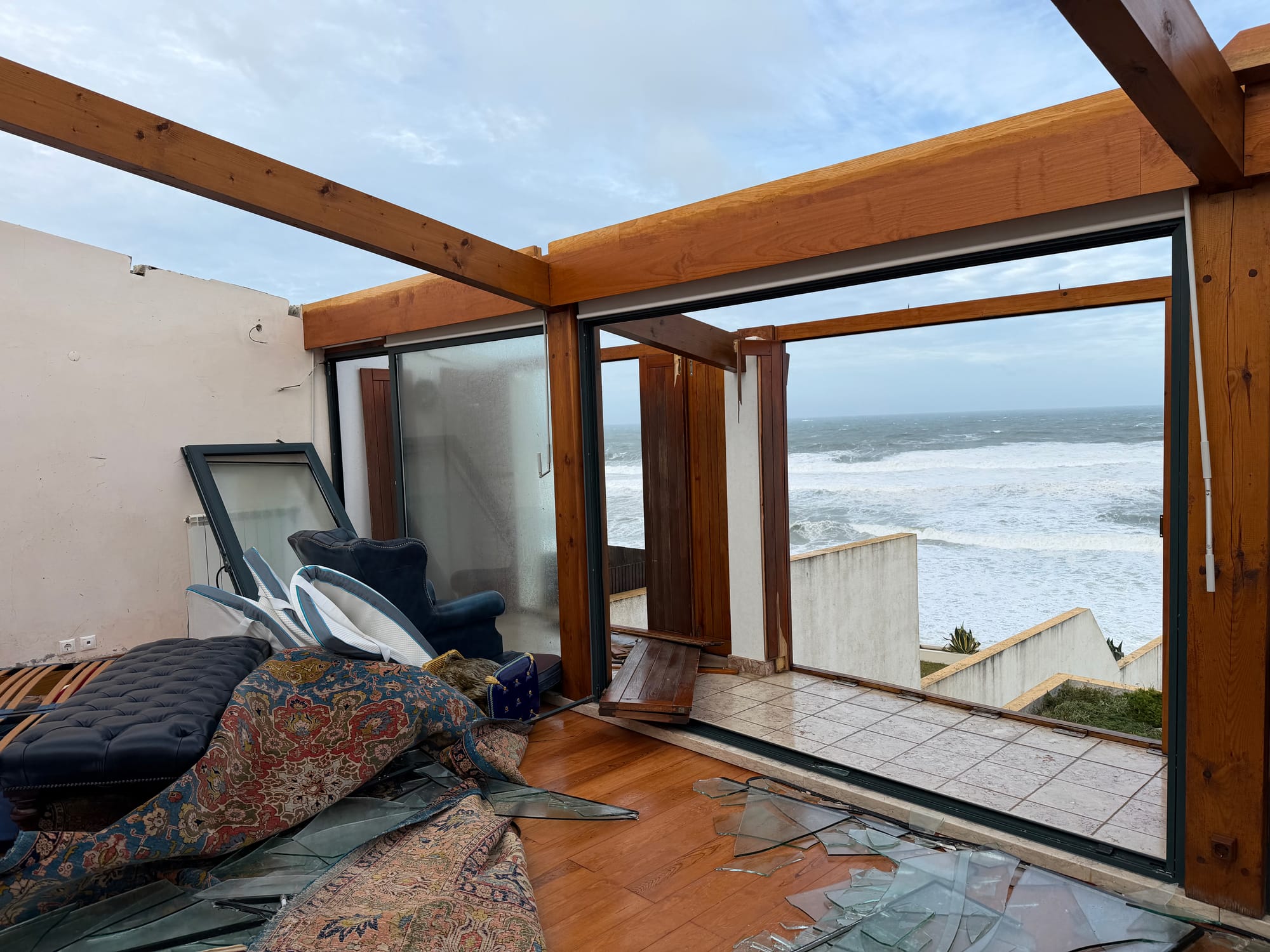
Inside, the remains of a concrete chimney lay where our bed had stood. The sliding windows that ran the length of the bedroom were in a million tiny pieces across the room. We came so close to sleeping there that night. The workforce, simply by being due at seven, had in all likelihood saved our lives.
We had been bracing ourselves for a few fallen trees. Maybe some lost roof tiles. Ha! We didn't even have a roof. Nor windows. Nor doors.
All of Bill's antique glasses were smashed, and a great deal else besides. Rugs ruined. We had a headful of plans and our barely-contained excitement for a new life, and the storm tore it to shreds in the space of a few hours. I suppose it is hard to mourn a house you never properly lived in. But you can stand knee-deep in the wet rubble of a new beginning, and grieve for it all the same.
Ours was the worst-hit house in the village, for the simple reason that it is the oldest. The newer builds, with their modern window fittings and well-behaved roofs, came through more or less untouched. We don't regret the choice. An old house on the edge of a cliff above the Atlantic was never the sensible option, and sensible was not what we moved here for.
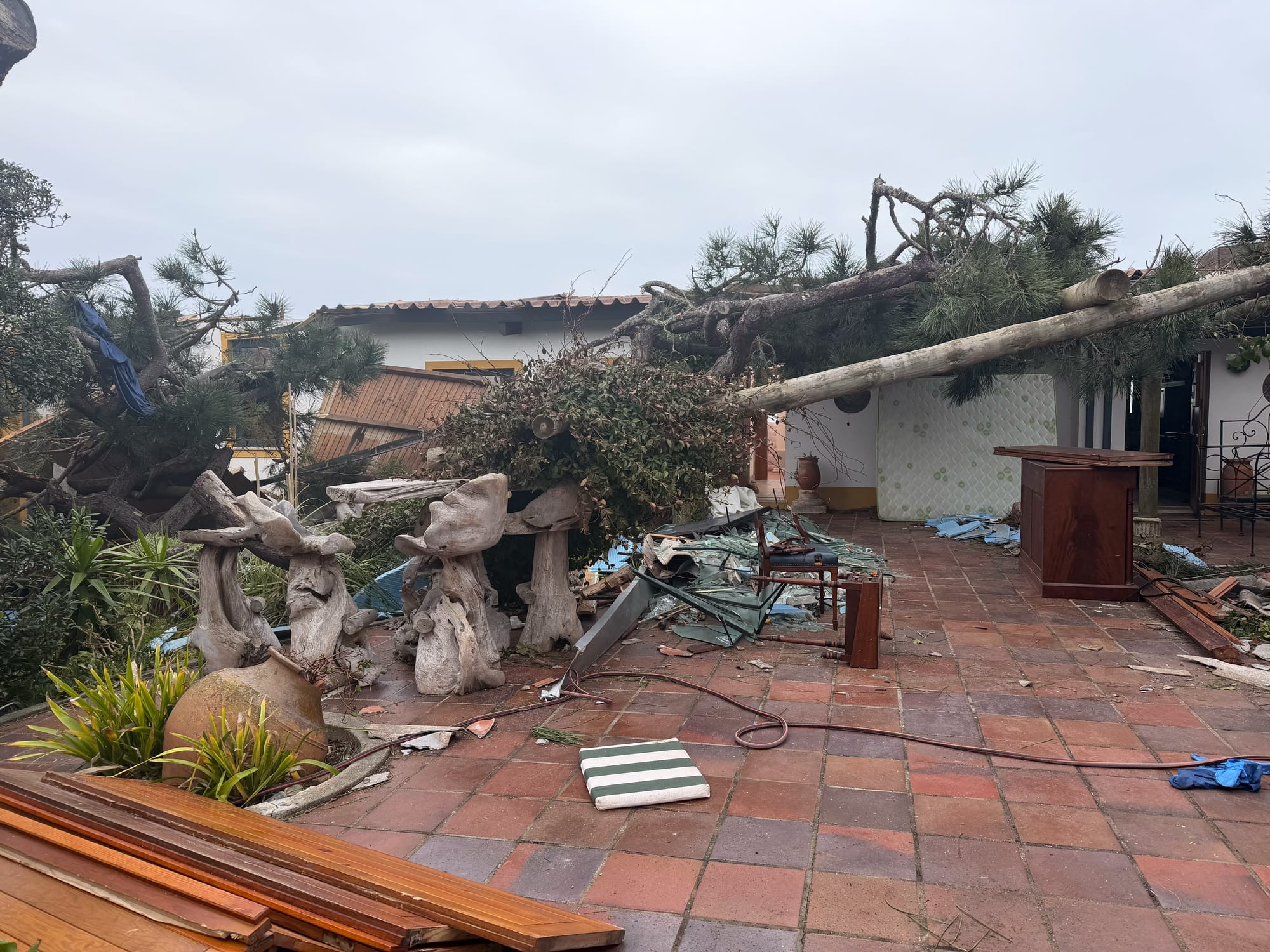
As well as being a more traditional build in a village increasingly shaped by white planes, sharp angles and flat roofs with very little in the way of Portuguese identity, our house stands out on account of the treehouse in the back garden. Perched high and proud in an ancient pine, it is a landmark everyone knows. It came through the night untouched. Roof, windows, door, all intact. Up a tree. In the strongest winds Portugal has ever recorded. The house, planted firmly on the ground, was not so clever.
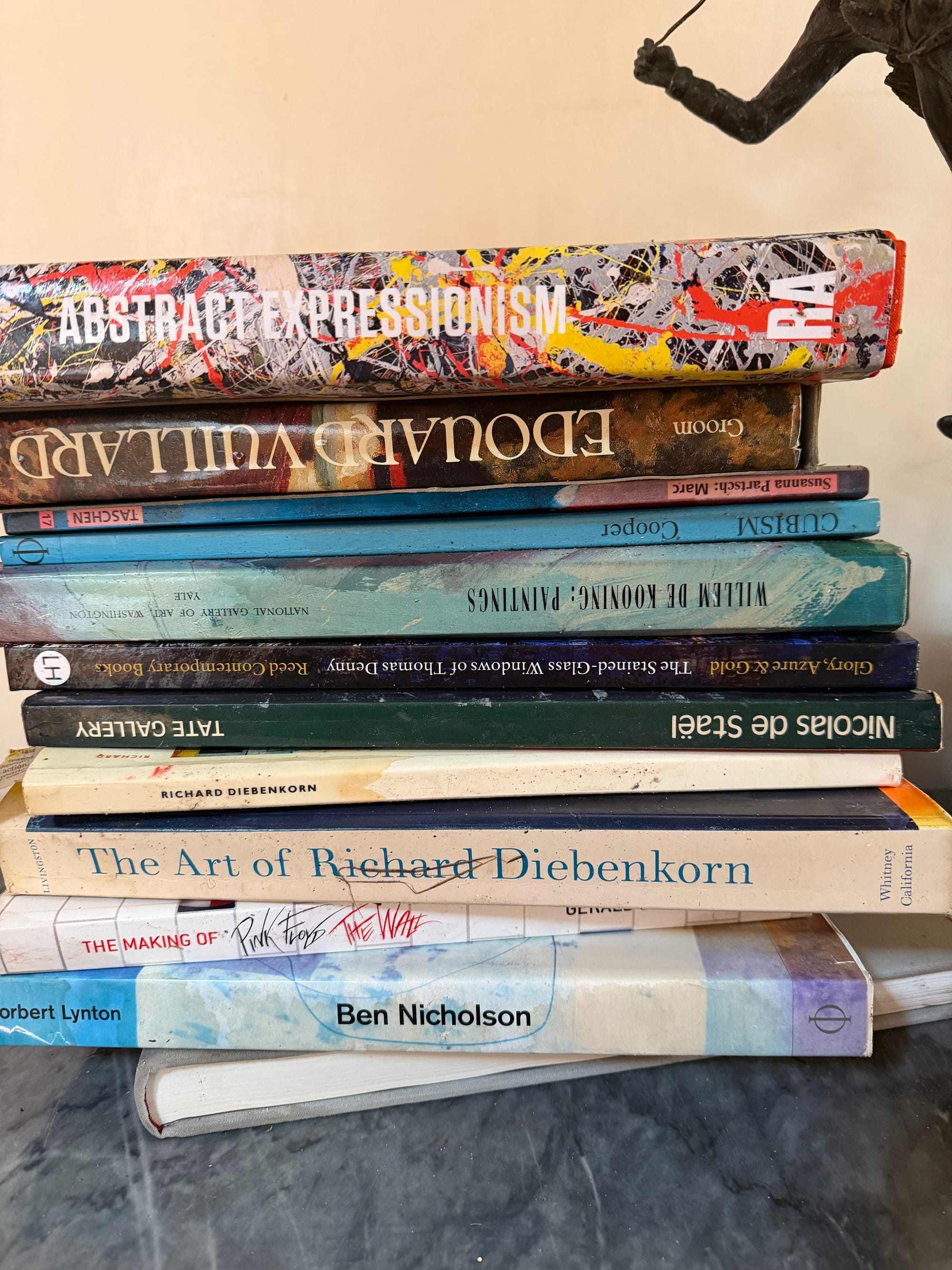
Among my own possessions, the losses were similarly acute. Clothes and shoes, obviously. Mostly replaceable. Art books, less so.
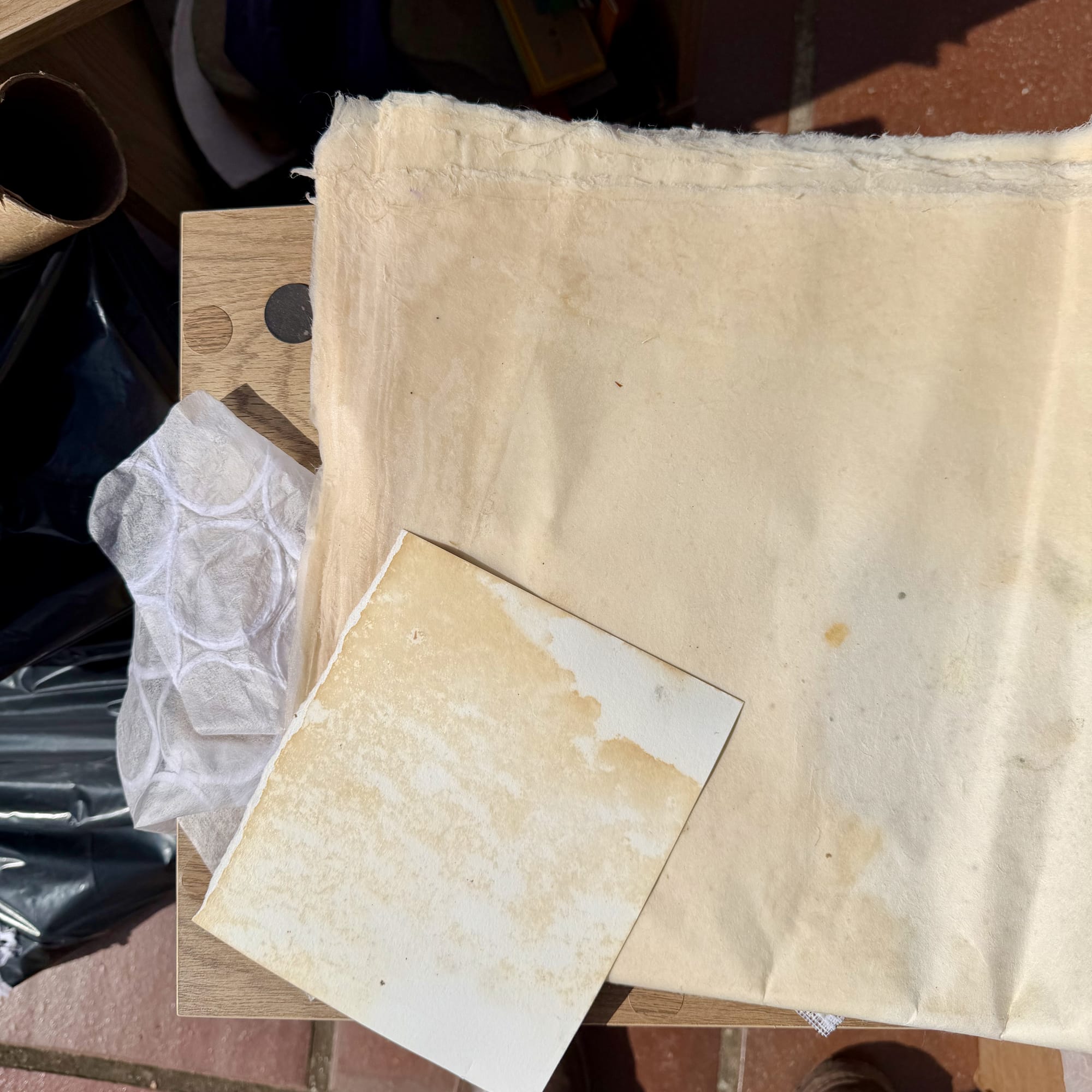
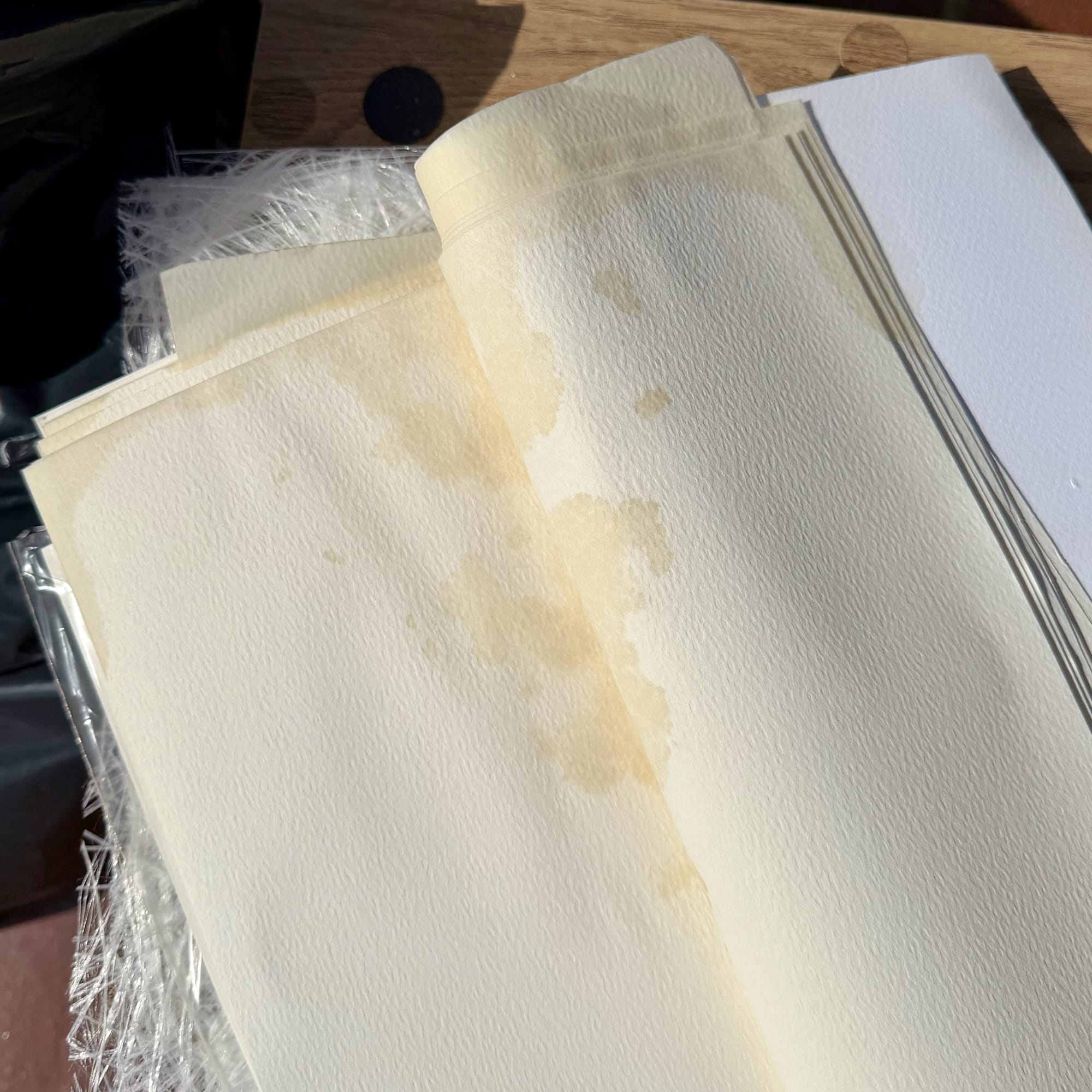
The paints, inks and pastels were largely unscathed, but a large collection of Japanese paper initially seemed beyond rescue. Kozo, gampi, thin strong sheets kept for printing and collage; paper I had carried across borders precisely because it does not tear when handled wet. Guess what? It tore anyway.
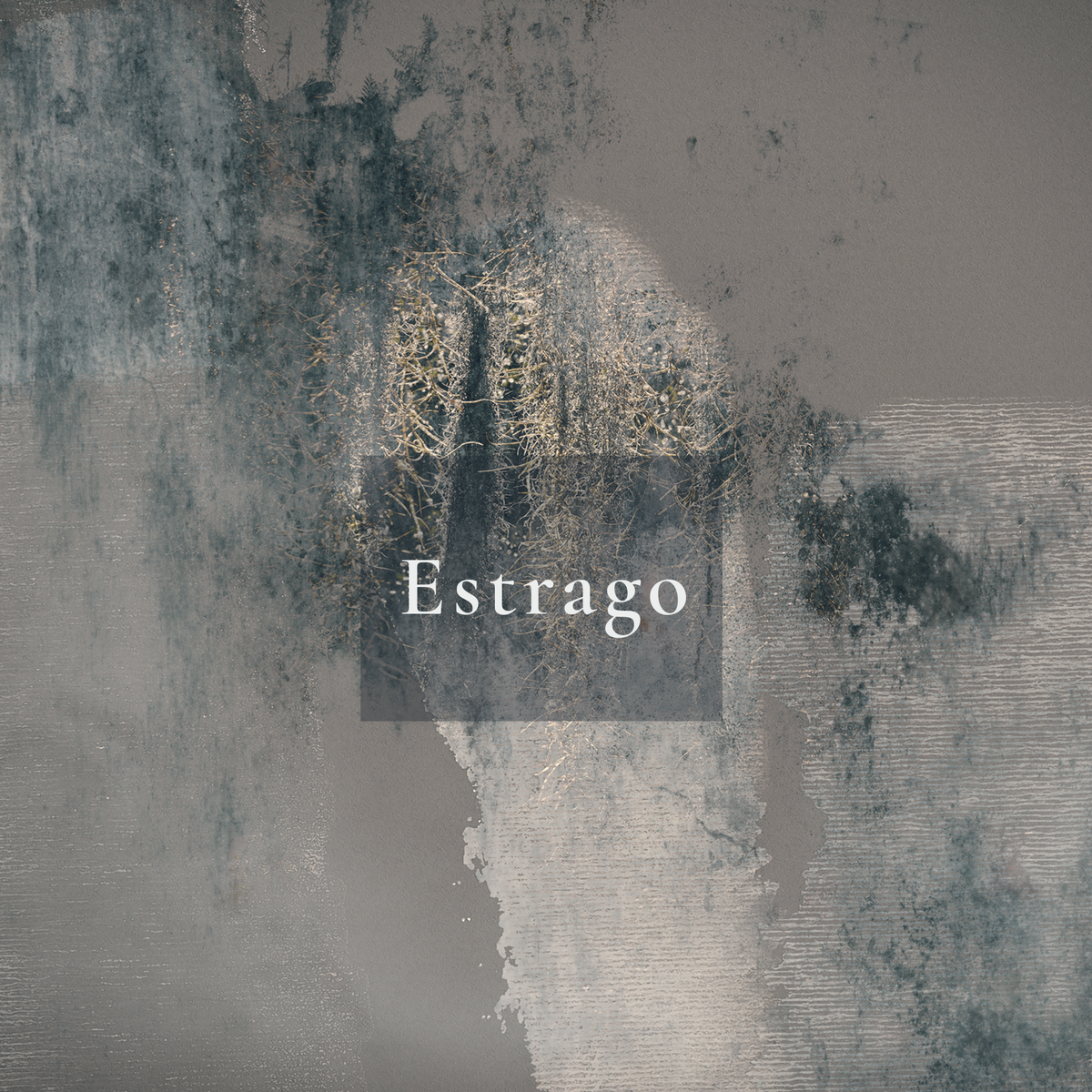
I chose to view it through the eyes of an optimist and look for possibilities. Wetted; dried poorly; wetted again, the sheets became wrinkled, discoloured, and stuck together around the edges. The sizing came off. Tide lines developed across them in a warm brown colour reminiscent of aged water. In one word: "estrago". Spoiled.
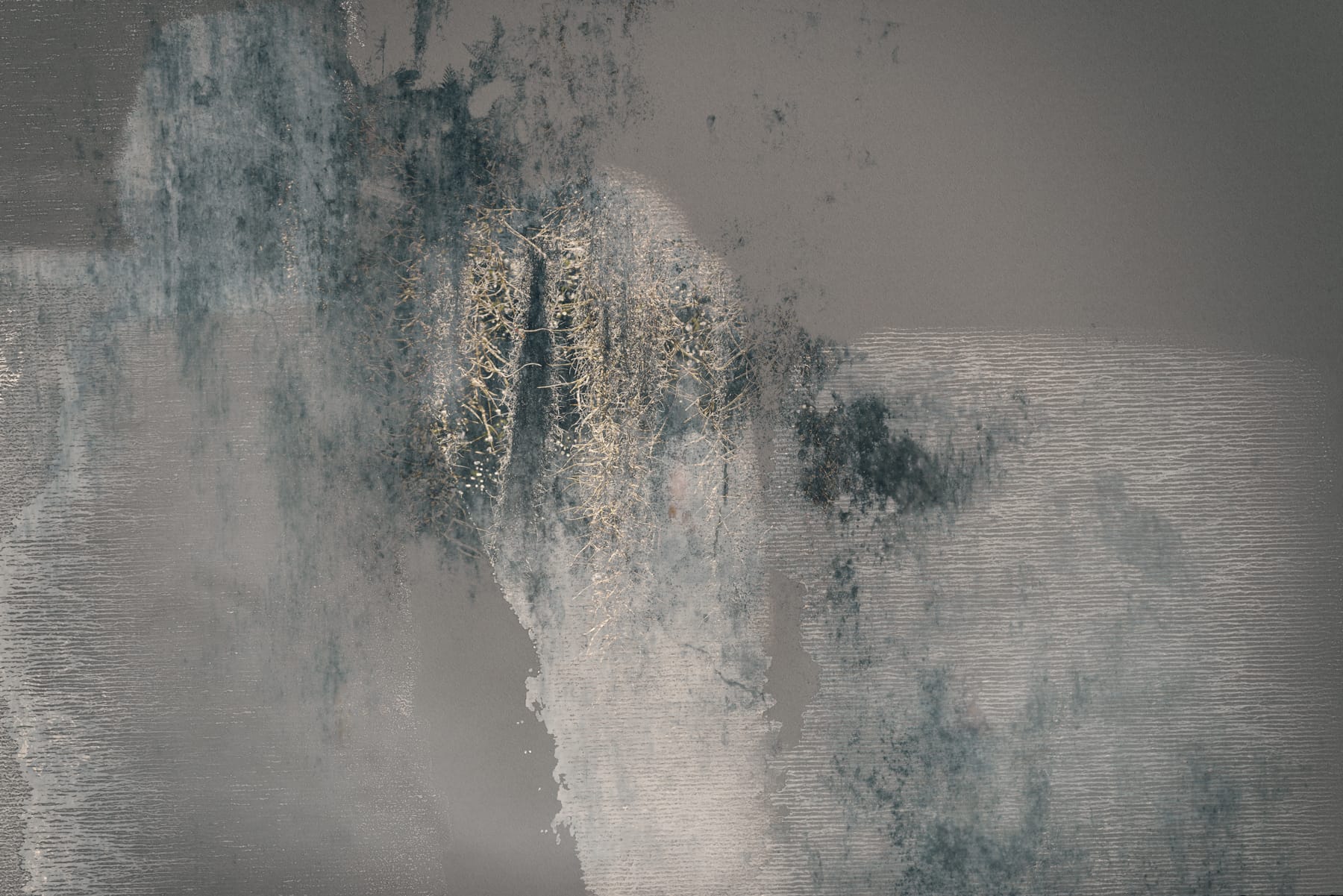
The thing they were for was no longer the thing they could do. But they are much more interesting as ruined pieces of paper. A clean sheet of gampi is nothing but a promise of things to come whereas the ruined sheets are a record of the biggest storm to ever hit central Portugal. Water has seeped into them in all directions, with little concern for artful composition. However in doing so it has left me a surface I could not have arrived at on purpose if I had tried for a year.
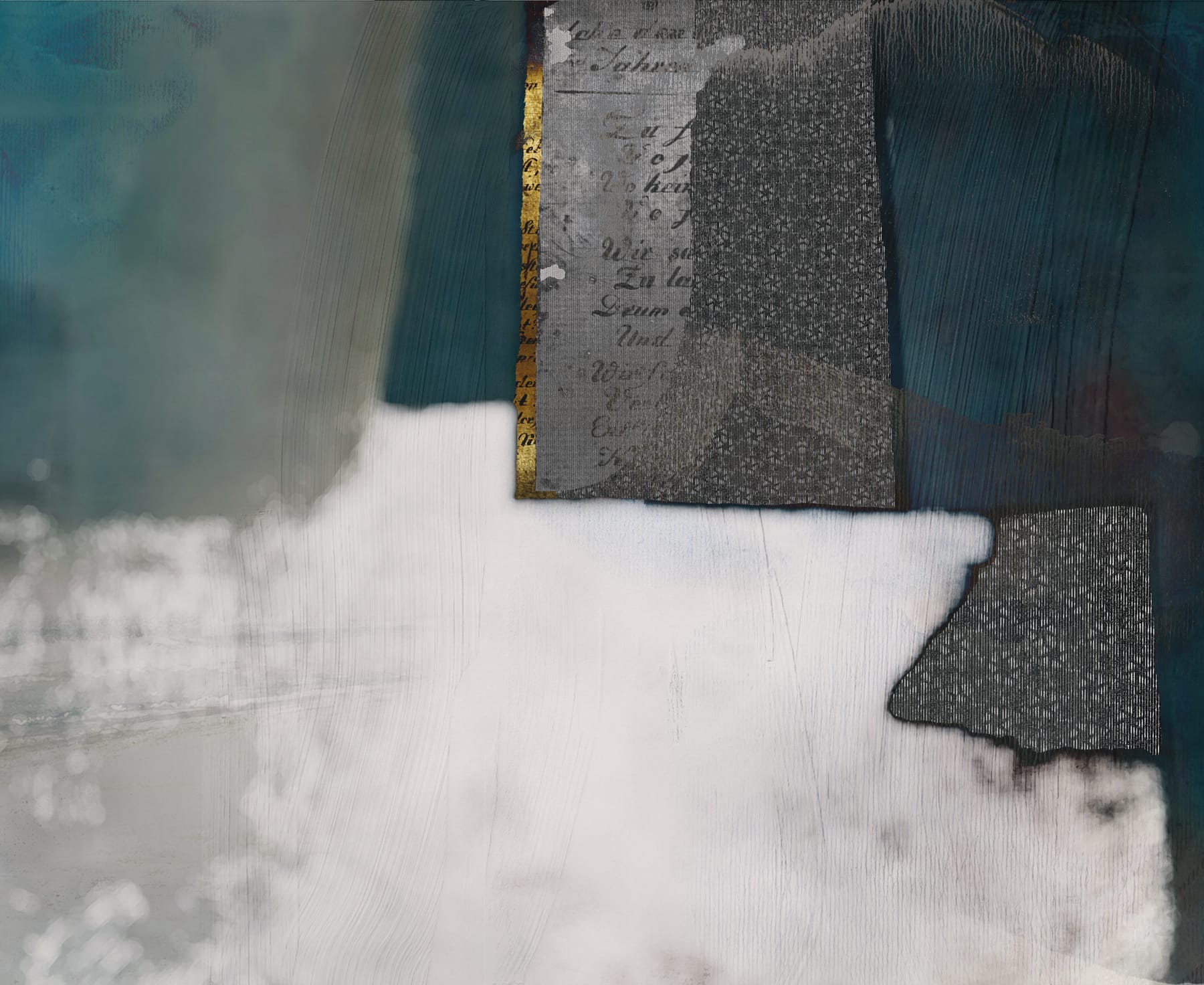
Antoni Tàpies spent a lifetime trying to make his canvases appear as if they had been brutally destroyed. The storm, with all its ferocious intensity, has left me with something similar.
So I have a set of images now. Digital images, made with a camera, of paper made by water. Sketches, really. There is a long way to go - these are merely working studies of the artwork. I look at them on a screen, the marks and patterns on the stained washi giving me something that pristine white paper never could. Where to take them, of course, is another story. Texture and surface will be important, and my collograph plates will provide that as they journey optimistically through my etching press. Perhaps they will then be collaged back into objects carrying evidence of the storm. What they are not going to be is a neatly flattened .jpg.
None of that can happen any time soon because of course, I have no studio. It is being rebuilt, along with the rest of the house. So the work sits in limbo. Oddly enough, I don't feel in a mad rush to start. There is a discipline in having to wait I fondly tell myself. That is one way to spin it. It's actually a bonus. Most creative people know the hoops they will happily jump through to avoid actually doing the creative thing. Alphabetising their sock drawer. Arranging the spice jars by colour. Reorganising them by name half an hour later. Then wondering if really they shouldn't be ordered by size.
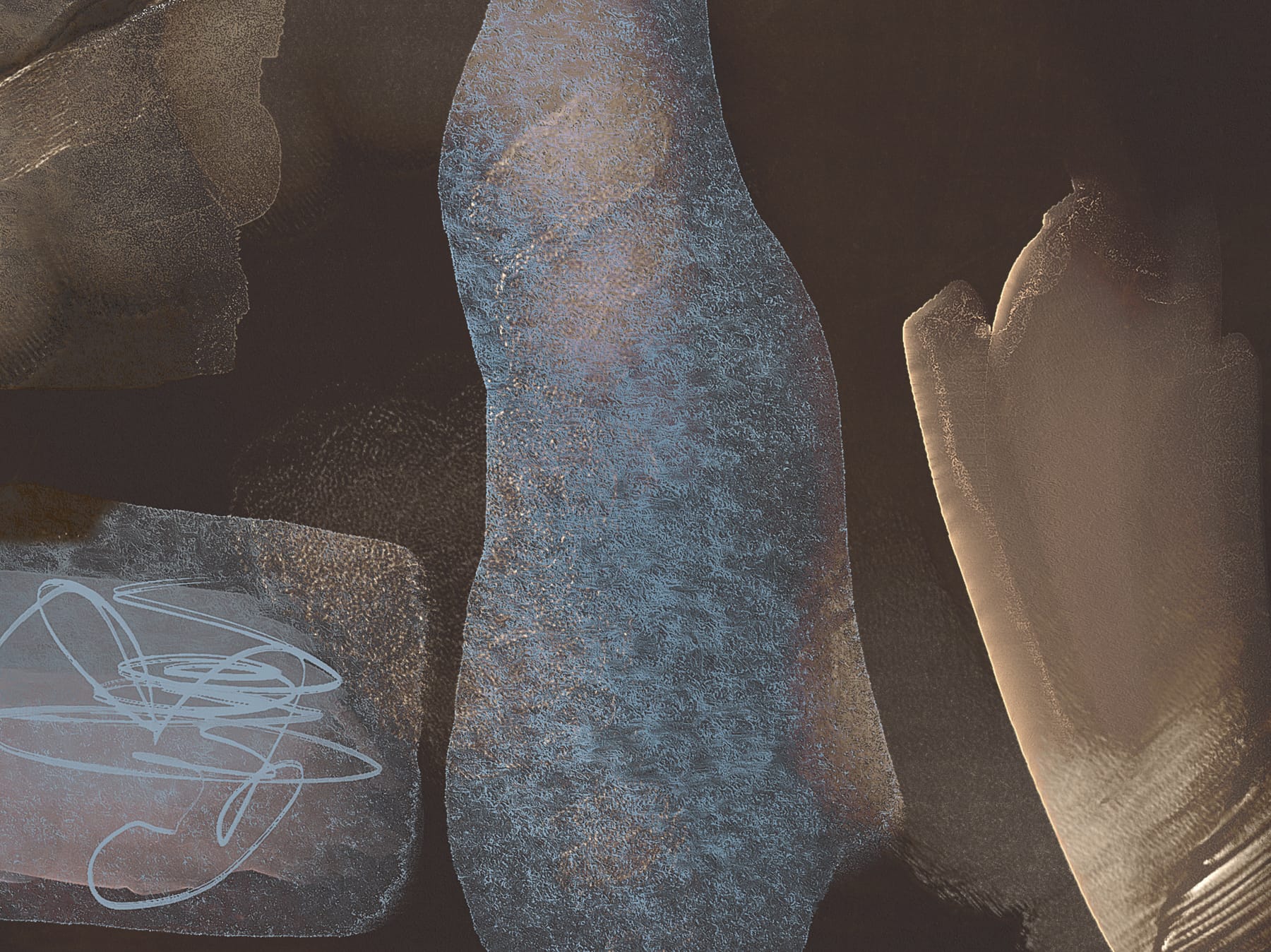
It occurs to me that this is happening back to front. You are meant to make the work first, then watch how it degrades over time. Prints go yellow, paint peels. Metals tarnish. Here the damage came first. . The storm did the first mark, made the estrago. Now I have to try to take it forward.
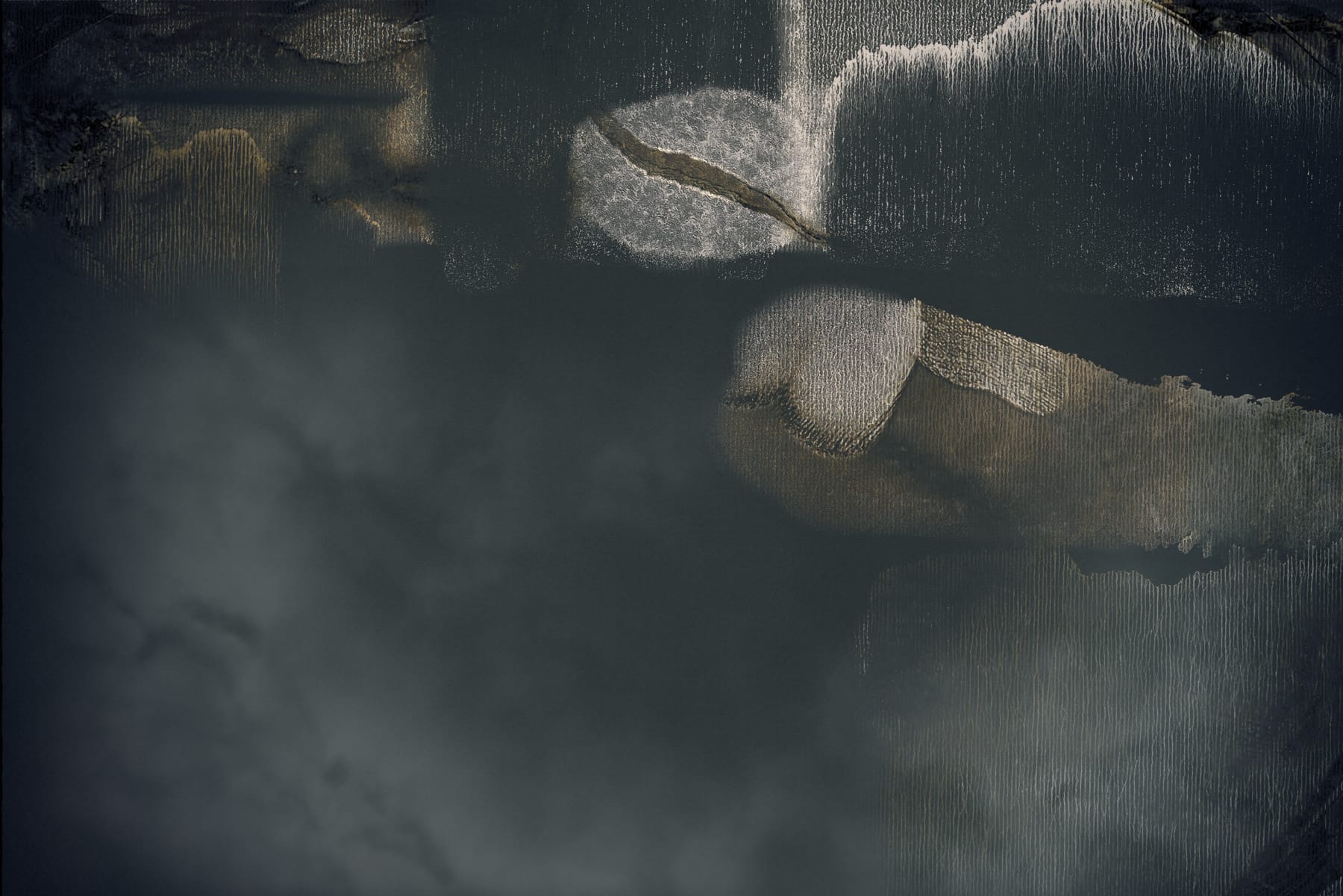
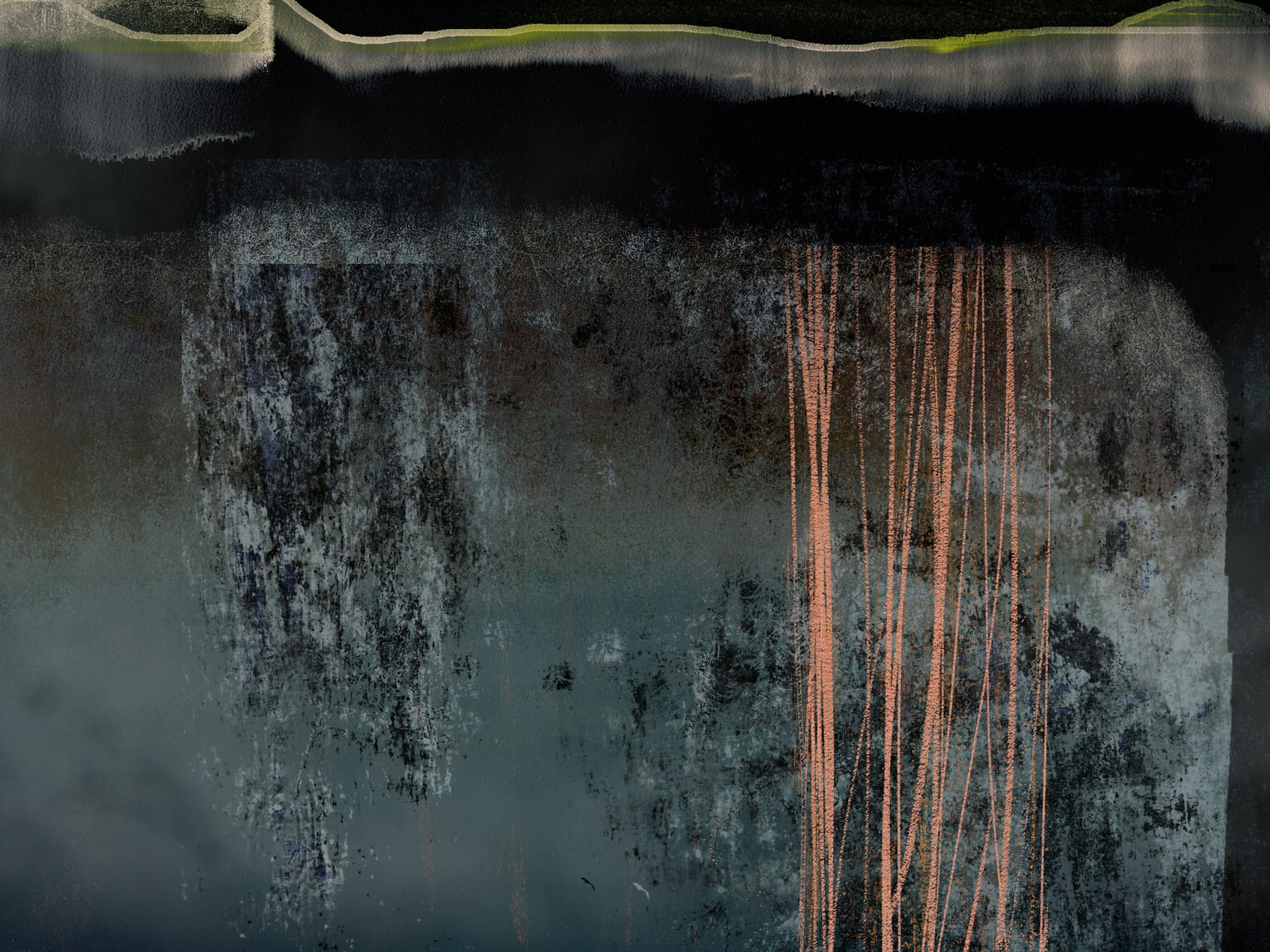
Of course, as with so much of my life I have no idea where this might lead. I know the press will change them and it is highly likely that much of the paper will not survive being soaked again then forced through the rollers. But at least this second ruin will be of my making and not Kristin’s. Progress of a sort I suppose. The studio is supposed to be finished by ‘autumn’. But autumn seems a long way off. Will it be September autumn? Or December autumn? Or maybe even January autumn. The latter, I suspect. People here talk about Portuguese patience. It works a bit differently and demands a lot more. I am starting to understand it now.
Analysis by Pangram suggests that this text was written by a human.