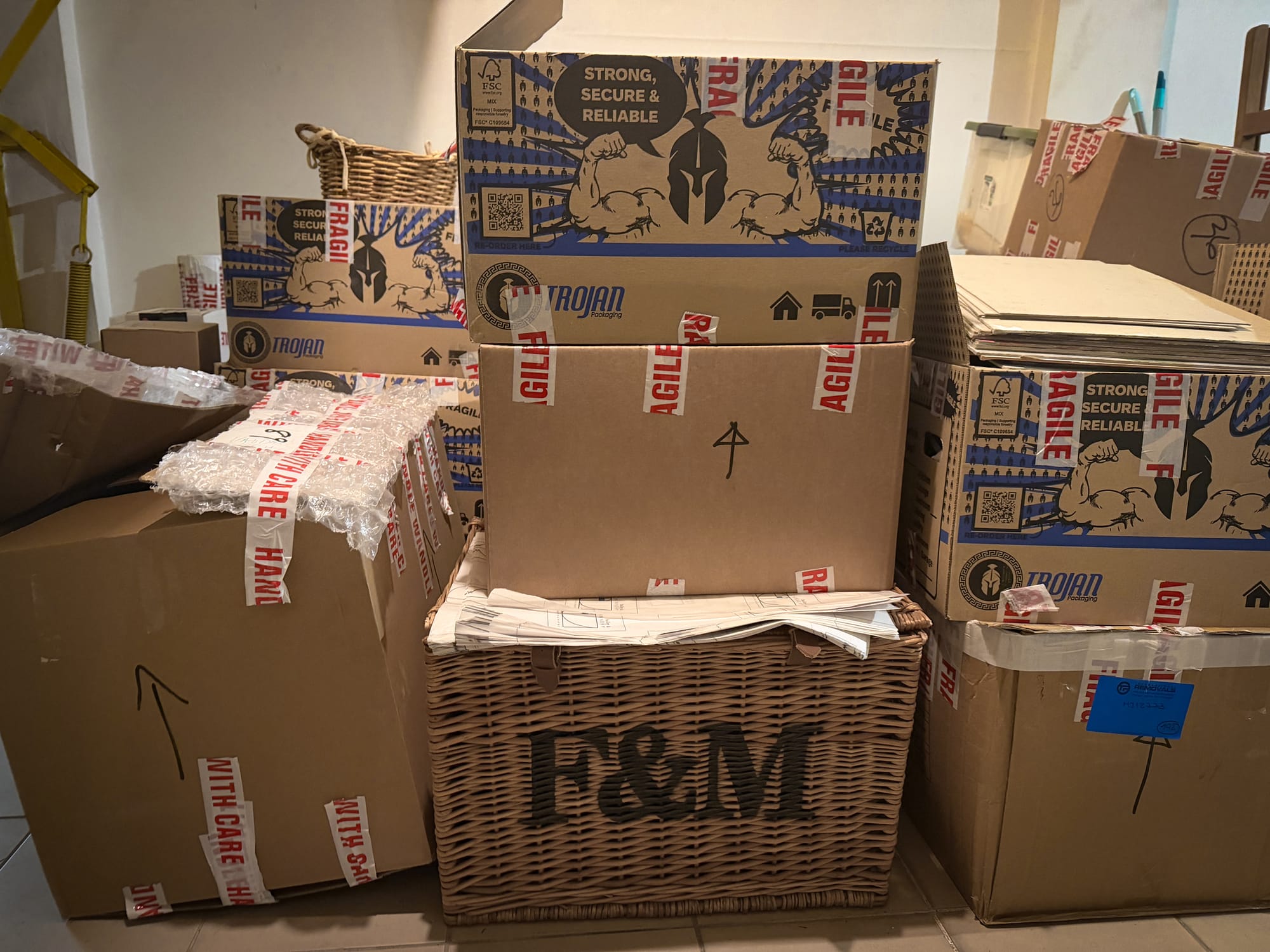
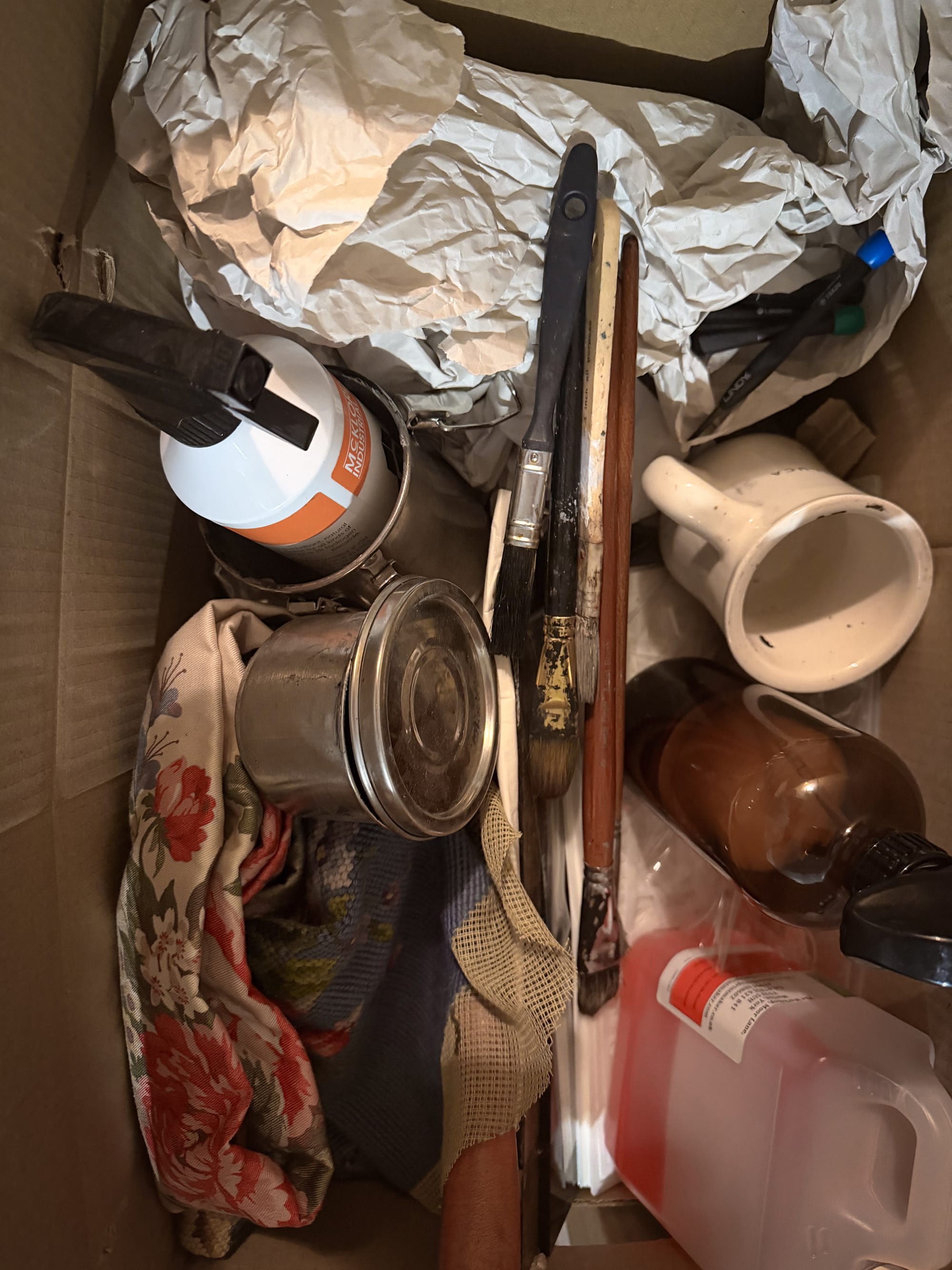
My studio is in boxes. I am sad to report that I don't just mean figuratively. The paper, the inks, the cold wax, the gold leaf, the collagraph plates, the pastels, the brushes and the total accumulation of twenty years of making — all of it is stored in the garage while the studio next door is being rebuilt. Every day I walk past those damned boxes. Even through the cardboard and tape, the smell of the art studio escapes. Turpentine and cold wax. Old paper, oil pastels, and paint. Twenty years' worth of making; all packed away into boxes.
I've been thinking about why physical materials play such an important role in my work — and why I cannot just be satisfied with shooting, editing and printing, which is essentially how most photographers create their images. The camera is already a highly advanced device for making photographs. Point, adjust camera settings, click, remove the memory card and hand the file over to Lightroom. The image arrives on screen, and you move sliders until it looks right. The whole process can be conducted in an atmosphere of comfortable hygiene and clean hands.
Perhaps I'm not after clean hands. I realise I need a more tactile relationship with my art. A lot of it has to do with paper: with conventional photography I am constrained by what I can persuade through an inkjet printer. I want to be able to choose paper that has a story of its own. Paper with a history perhaps. Something knurled and gnarled and knotted brought back from a tiny paper mill somewhere in Morocco. I have a small collection of paper made from elephant dung, discovered improbably at the Duty Free when leaving Sri Lanka.
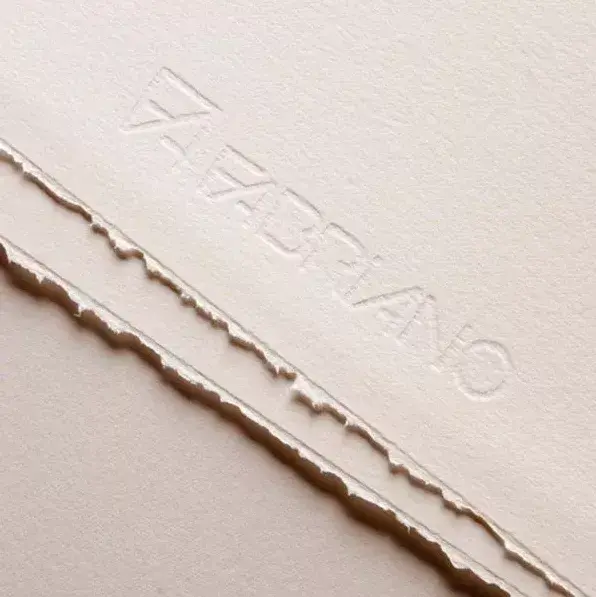
Unsurprisingly, ink behaves differently – the way it gets laid down varies according to many factors – sizing, weight, texture, the humidity in the room. I want to be surprised by the way it flows onto the sheet and how a particular surface absorbs or rejects it. I want a surface that offers a tactile experience before I have even made a mark. Paper that often has its own ideas about the best way forward.
When working like this, I think differently. The hands sense things that the eyes haven't yet seen. Touch and feel. Inch forward slowly. Observe what the paper is doing. Apply pressure too heavily, and you break the surface of it. Too light and none of the ink adheres. The material has its own agenda — and negotiating with it is part of the creative process.
It is a very different relationship to the one I have with software. That is essentially about command and compliance. The software performs exactly what I ask it to do, which is not always what I was hoping for. But it is unquestionably logical, and every stupid thing I do is exposed.
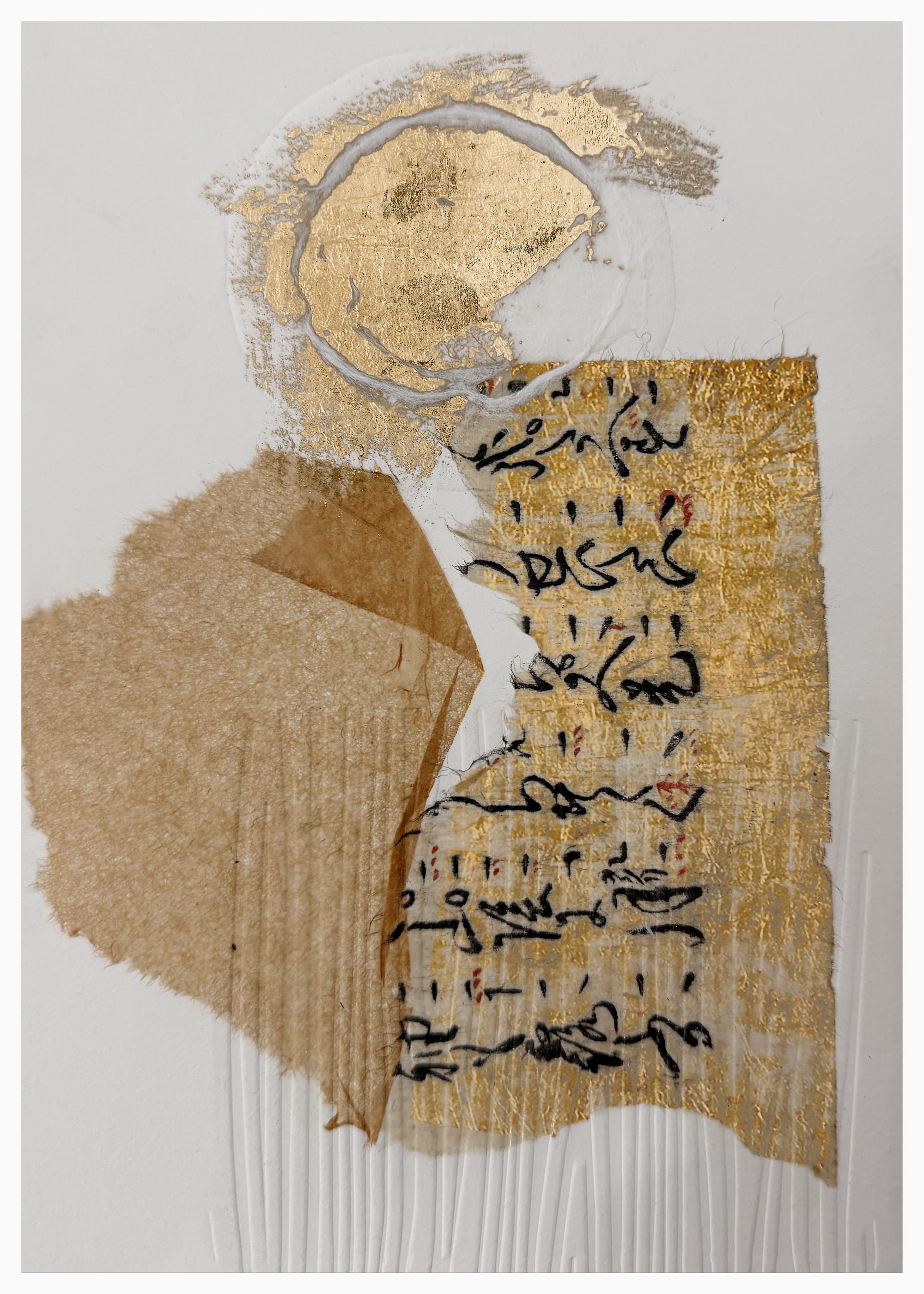
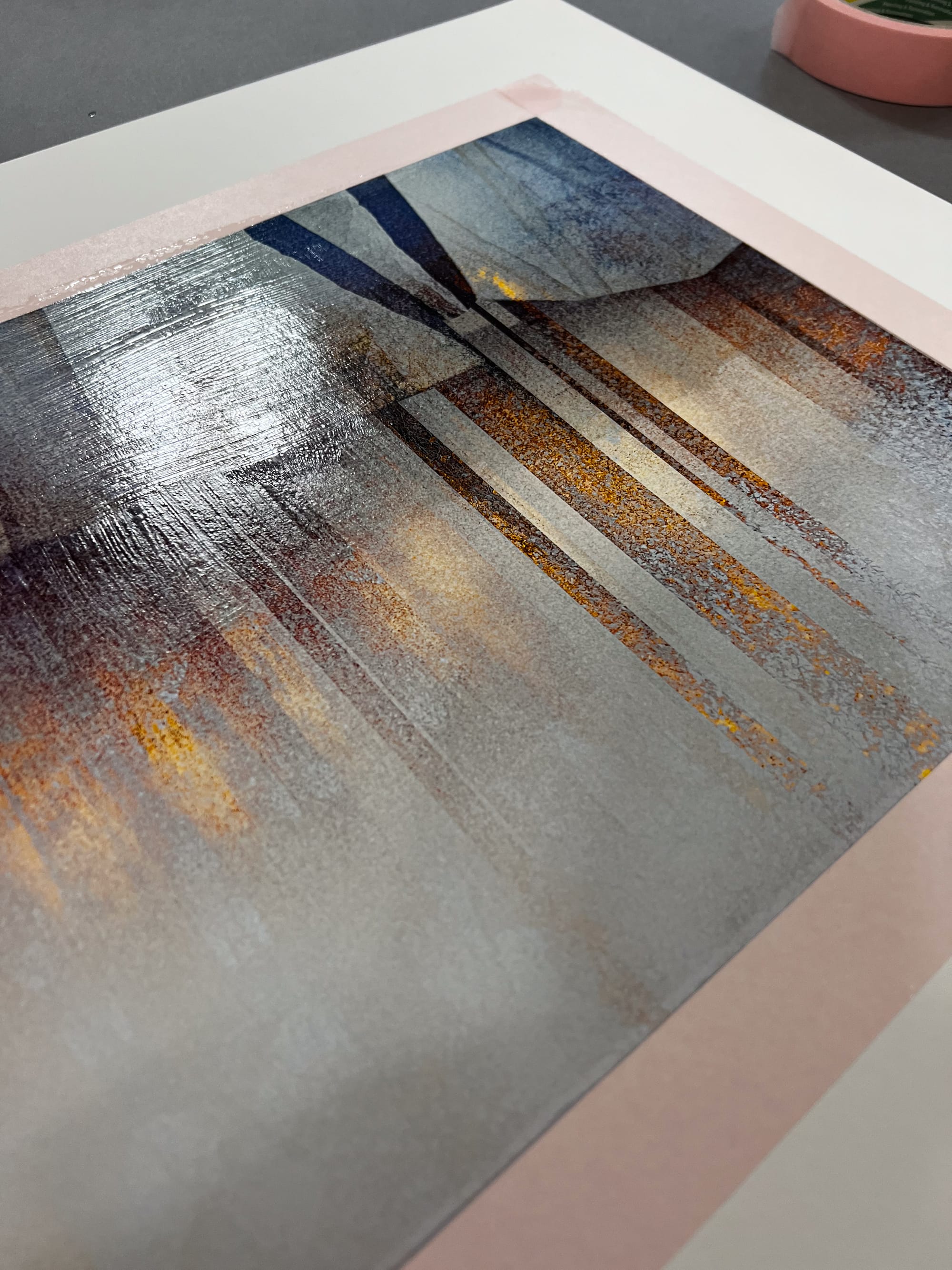
Paper behaves differently; it will compromise. A crack appearing in a line somewhere you weren't expecting, or prints pulled differently from their plates — neither is an error that can be corrected with a nifty "Control Z". These marks are part of the history of the image.
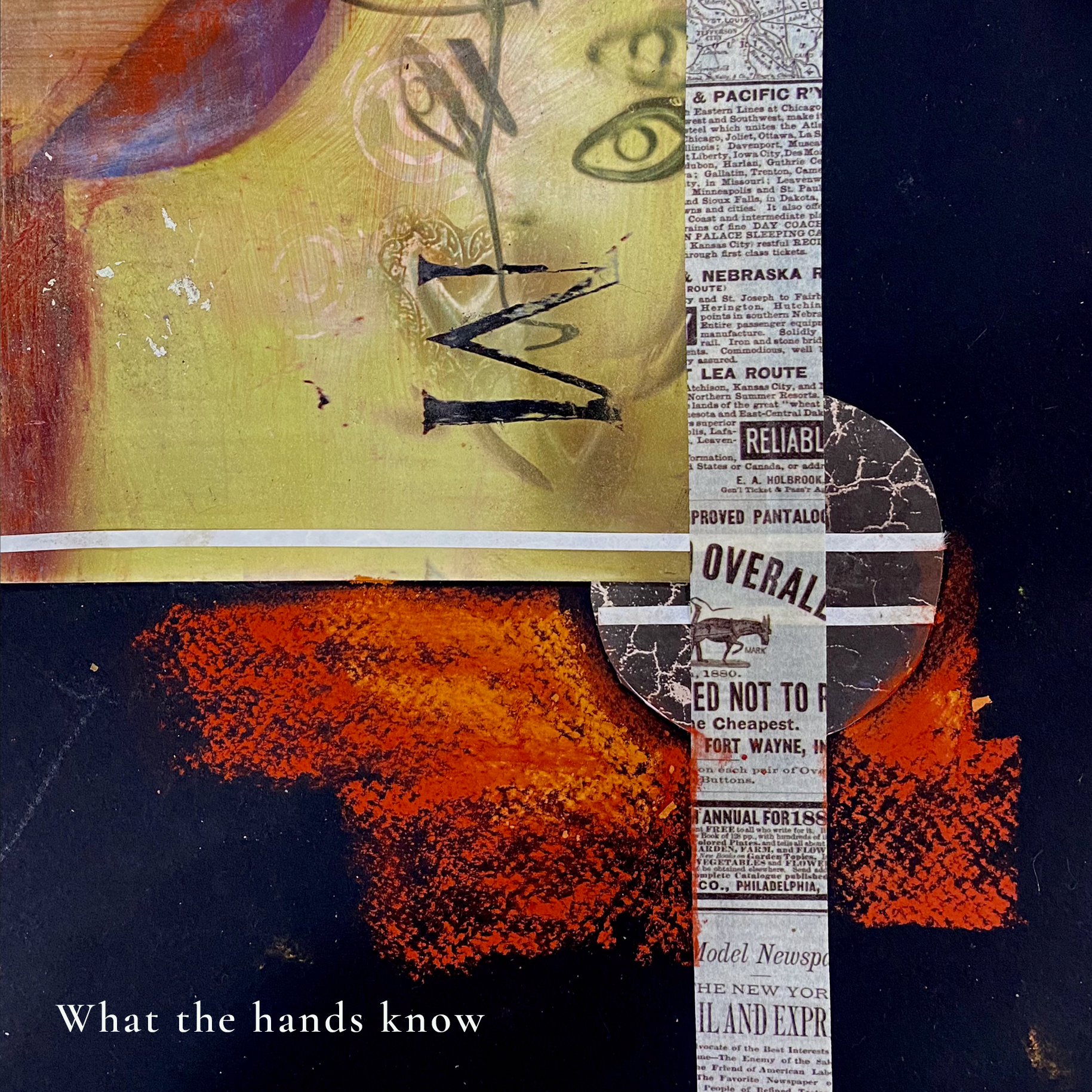
Physical materials introduce unpredictability: a hiccup that cannot be rectified by slider adjustments. When applying cold wax, the resulting mark is precisely that, the mark created at that moment — and more often than not it will not be exactly what was intended. Of course you can continue to modify that mark, but you cannot pretend it did not occur.
Physical materials cause you to slow down in a manner that is very different from slowing down on-screen. Slowing down on-screen is something you impose upon yourself and arguably goes against the nature of the medium — something built for fast turnaround and repeatable results. Working with paper and ink has slowness built in, on account of drying times and the intervals between pulling prints. It comes free with the materials. The muttering and pottering and the standing around drinking tea – that's where the thinking happens.
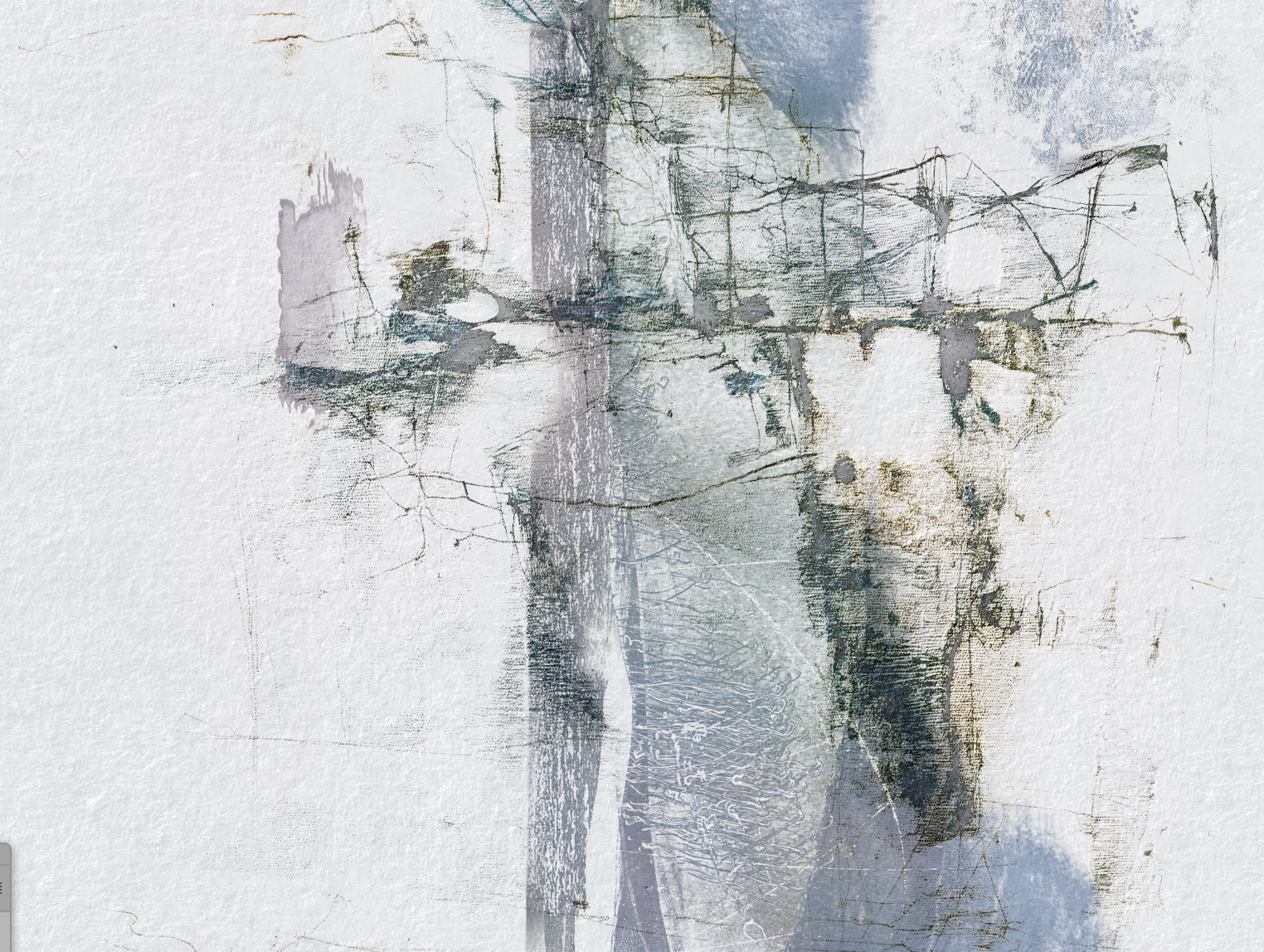
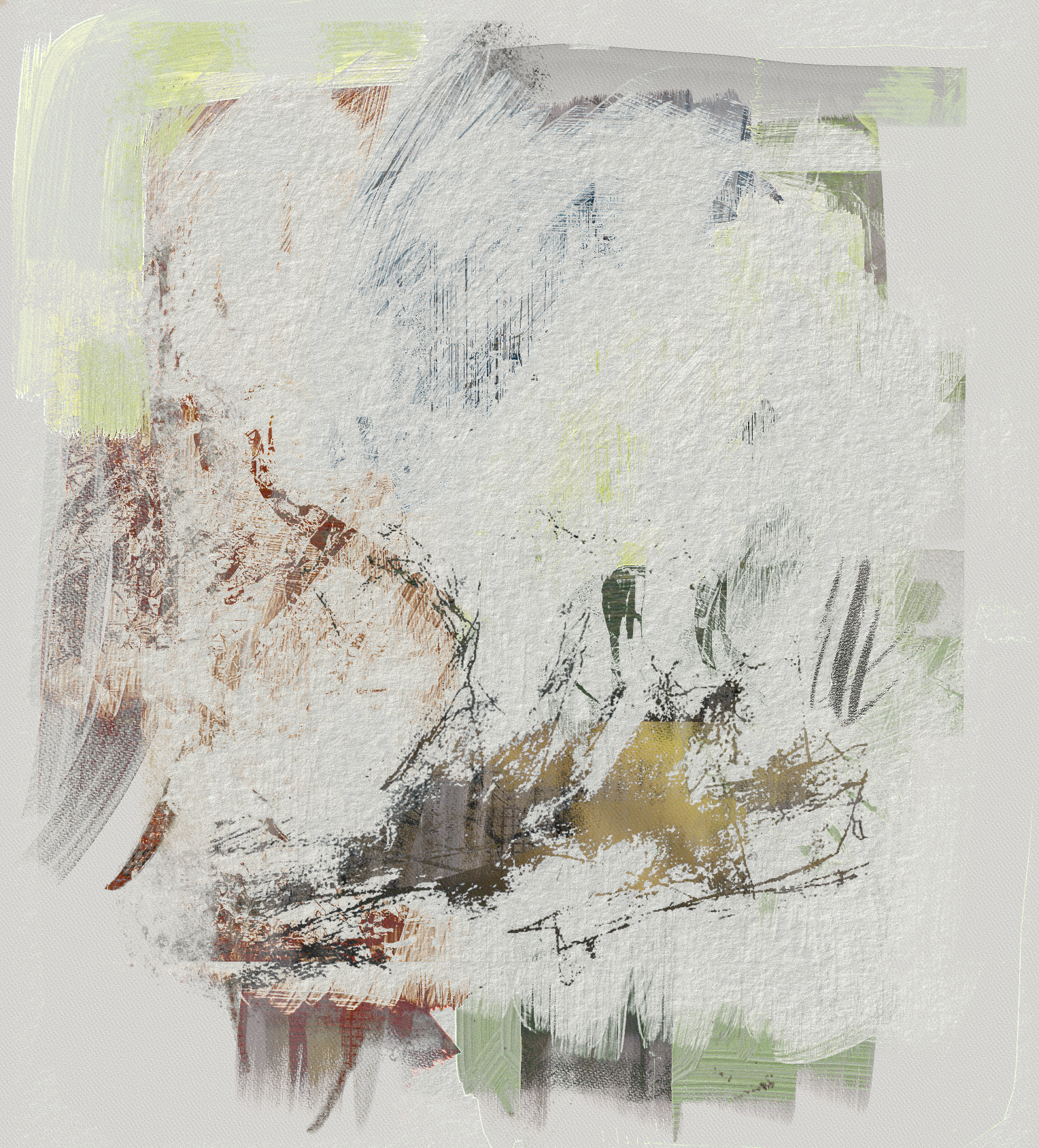
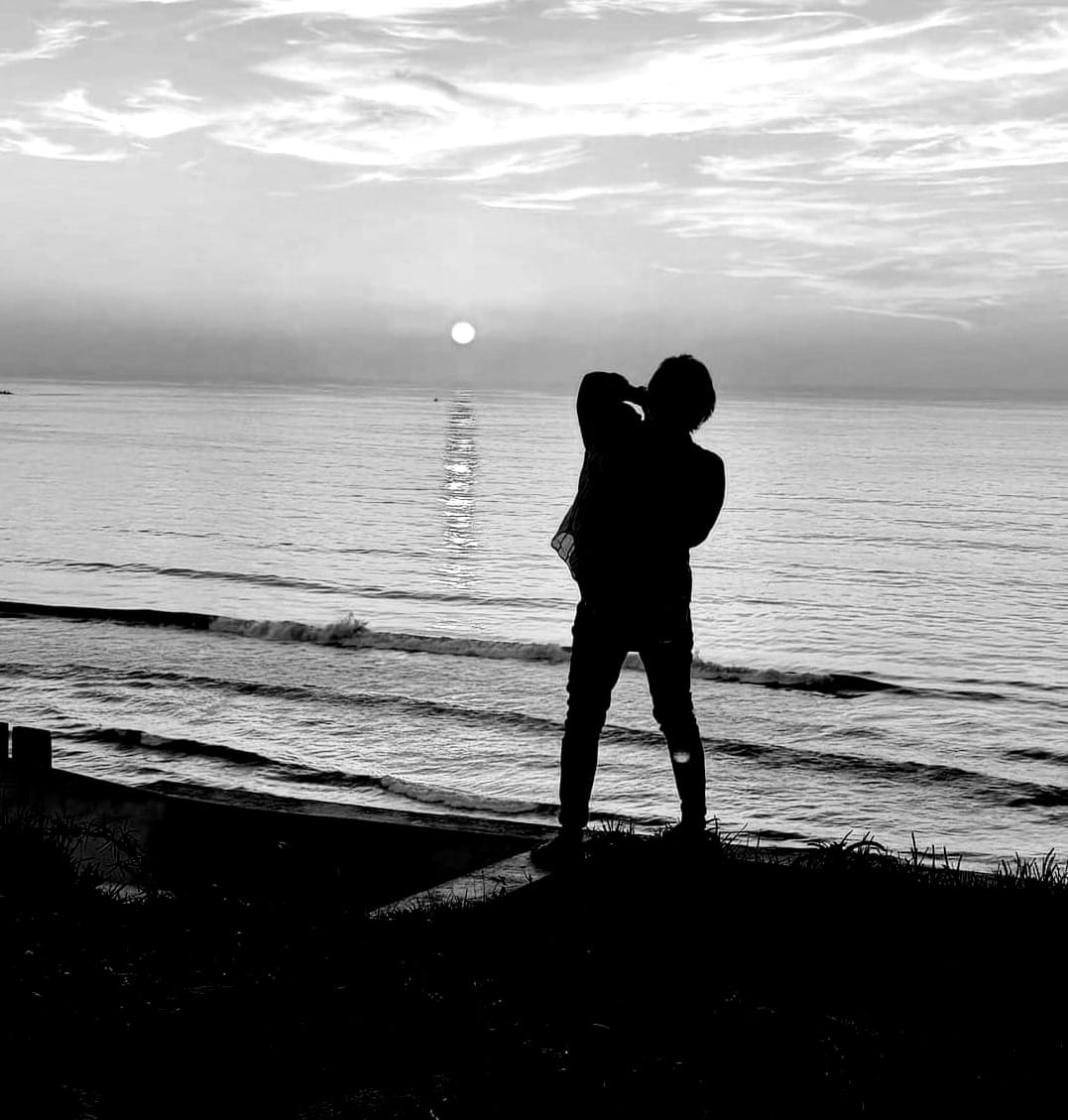
The majority of my materials remain in storage while the restoration work continues. But constraints are good for the creative spirit, right? So I have been doing what I can with what I have. Pen, paper, and Rebelle. Nothing precious: silly little marks while I watch the light on the water, trying to get a gesture that conveys something of what I see. The line refuses to play along; it's never what I want it to be. But the failures at least have texture to them, in the way that a deleted .jpg never will.