

A petty cancellation fee. An impressively creative act of revenge. And our shared pleasure in watching a corporation get a bloody nose.
And yet....
Brandon Thomas is a software engineer in Atlanta. He recently became so incensed after being charged an early cancellation fee by Adobe that he decided to take action. While most of us would have paid the fee while muttering darkly into our coffee about our insignificance in the face of corporate greed, Mr Thomas took a more imaginative approach.
With Claude’s help, he set about creating free alternatives to seven of Adobe’s best-known applications. Within days, snide copies of Photoshop, Lightroom, Illustrator, Premiere Pro, After Effects, InDesign and Acrobat had been published on GitHub, where anyone and everyone could download them.

Across the world, the cheers rang out. From design studios and editing suites to the dimly lit offices of advertising agencies. Photographers hunched over laptops in spare bedrooms collectively raised a mug of lukewarm tea in solidarity. And it’s not difficult to see why. Adobe has hardly gone out of its way to endear itself to its loyal customers.
Remember the outrage in 2013 when it moved its customers onto Creative Cloud subscriptions? The horror. Photoshop was no longer available as a one-off purchase. We had to rent it, whether we liked the arrangement or not. And it soon became woefully apparent that extricating ourselves proved rather less straightforward than getting in.
Earlier this year, Adobe agreed to a $150 million settlement with the US Department of Justice over allegations that its early cancellation fees were not as transparent as they should be. Terminating subscriptions was a feat of patience and endurance entirely disproportionate to the task. Adobe denied wrongdoing. Of course they did. A $150 million settlement proves that.
And then there’s the delicate matter of Firefly, Adobe’s generative AI tool. Proudly promoted as a commercially safe option trained on licensed material. How unfortunate that Bloomberg subsequently discovered that some of that material included images generated by Midjourney (and others). The very companies whose own training practices had attracted such fierce criticism.
The visceral satisfaction of seeing a behemoth like Adobe potentially humbled cannot be overstated. Whose day isn’t cheered by a good old dose of schadenfreude? But none of this proves that Adobe is uniquely wicked. It makes reliable and exceptionally capable software, much of which I use every day. It also employs a great many talented people.
But given Adobe’s history, perhaps it’s not hard to see why someone giving away free alternatives to its most profitable products was greeted with such unseemly delight. There are only so many times you can kick your customers in the shins before they start rooting for the other side.
The size of the settlement probably tells us all we need to know about Adobe’s opaque billing system. The case against their software is a different thing, and I am happy to defend it. For many of us, myself included, Photoshop and Lightroom have become indispensable to the way we make our pictures. We’ve spent years getting to know them, adapting them to our particular needs and becoming thoroughly set in our ways when using them. It’s not something we are going to relinquish readily.
Adobe knows all this of course. It is also fully aware that there exists a formidable moat around its fortress, much of it dug by its own customers. It’s not just the software keeping us loyal. It is all the years we’ve spent learning the peculiarities of Photoshop. Knowing instinctively which blend mode to use, or where to find some obscure command without having to hunt through the menus. The plugins we’ve bought, the shortcuts we’ve memorised, the workspaces we’ve set up for particular jobs. I can find my way around Photoshop almost without thinking.
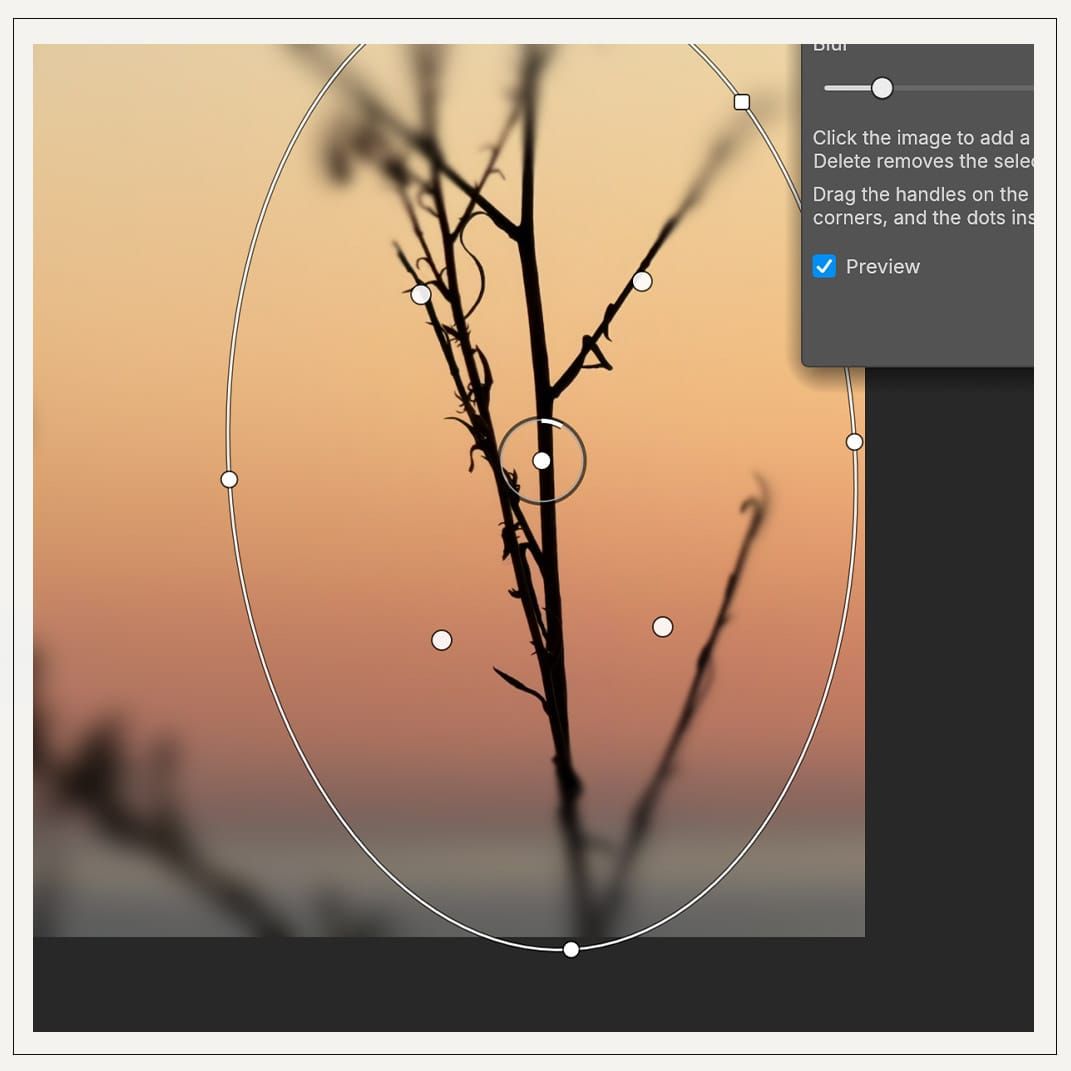
At first glance, PhotoCraft, the Photoshop clone, is uncannily convincing. The familiar tools are there, the menus are exactly where you would expect them to be, and even the keyboard shortcuts have been faithfully reproduced.

Appearances, however, are often deceptive. It’s Photoshop Jim, but not as we know it.
Reviewers who’ve actually put PhotoCraft through its paces have found a few problems. Selections that aren’t terribly precise, unreliable healing tools and filters that don’t always let you preview what you’re doing. Not everything is broken, far from it. Some of the tests have been surprisingly successful. But there are still enough gaps to make it a risky substitute for the real thing.
The researcher Hendrik Erz has coined a useful word for this sort of thing: slopware. He is careful to say that it isn’t necessarily software that fails. It works and it looks polished. What is missing is decades of accumulated judgement, and there’s no knowing if or when that absence will become apparent.
Whether or not it’s right to lump Photocraft into the slop trough yet is unclear. Thomas readily admits that his programmes are still in their infancy, and holding it up for comparison against the mighty Creative Cloud is clearly ridiculous.
Producing seven convincing imitations of Adobe applications in a few days is pretty damned impressive, certainly. But the issue has nothing to do with Claude being able to generate the code while barely breaking out into a sweat. It’s whether anyone is prepared to spend the next ten or twenty years maintaining and improving the products.
And so, to the defence. I still remember feeling I had lost all sense of financial proportion when I forked out around £500 to buy the software in the mid-90s. I didn’t even know what I was going to use it for. Just that I needed to have it. Hell, I could have bought a small used car for the same amount, and all I received was a box containing a CD. Upgrades arrived every eighteen months or so, at extra cost if you please. So I never felt that the subscription model was actually that bad. The cost of entry tumbled, giving users access to programmes they might otherwise have found prohibitively expensive. Updates became available without separate purchases.
And the monthly fee guarantees us something it is all to easy to overlook - the boring bits of software’s capabilities that nobody ever notices. Decades of testing and tinkering, the tedious business of nursing millions of lines of code through one update after another. Ensuring the filter doesn’t throw a tantrum every time Apple updates its operating system, and the blend mode works the same way today as it did ten years ago. Because that is what we expect. And that is what Adobe is actually selling us with their subscription. A maintenance contract with several thousand engineers. Judged per hour of use, it quickly starts to look like great value for money.
It is hard to defend the fact that if we decide to stop subscribing, we lose the ability to go back and work on our old photographs. A Lightroom catalogue with 30,000 images and a decade or more of edits goes read-only as soon as we pull up stumps. And that is a serious complaint. I’d probably trade half of Photoshop’s new features for a guarantee that I could continue my Lightroom edits at least until my version becomes obsolete.
I should declare an interest here, or possibly a conflict: the machine that wrote PhotoCraft also helped me tweak and design the website you’re reading this on. I’m in no position to claim any kind of moral high ground.
Needless to say, I won’t uninstall anything or sever my ties with Adobe. I’ll keep coasting around in Photoshop, as I do most days. My mouse knows the shortcuts and my eyes know where to look, even when I’ve forgotten where I’m going. Somewhere in Atlanta, seven free lookalikes sit patiently waiting for their chance to prove that they are more than just an elaborate practical joke.
The chances are Thomas’s project will attract a community of developers willing to maintain and advance it and use AI as a willing assistant. Dismissing the whole enterprise because it was created with artificial intelligence would be shortsighted. Almost as foolish as declaring Adobe is history because somebody has dressed up a new programme in Photoshop’s clothes and hoped nobody would notice the difference.
FOOTNOTE:
In fact, curiosity got the better of me and I’ve now downloaded and installed PhotoCraft myself. And somewhat inconveniently for the argument I’ve been making, it works. So far. I haven’t exactly put it through the wringer yet, nor do I intend to. The interest has been satisfied and I have better things to do. But there it is, happily running on my computer, costing me precisely nothing.
