
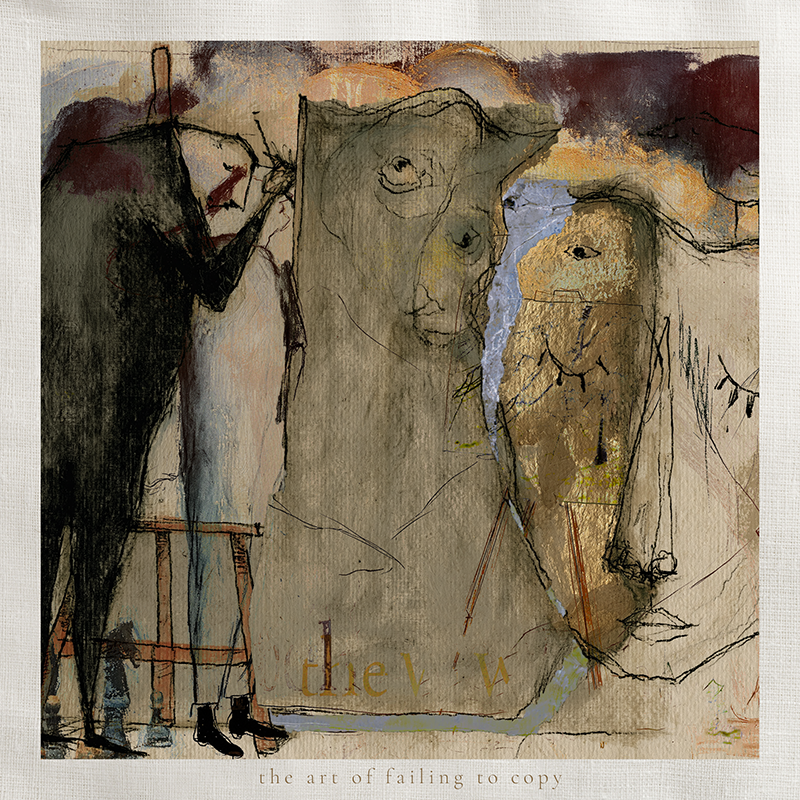
The first time I discovered that the Louvre issued permits to artists to come in and copy paintings, I thought I had misheard. Surely that goes against every rule of copyright and intellectual property? Apparently not. If they can sit out the full two-year waiting list, they can set up an easel and get on with doing precisely that.
It is one of the Louvre’s oldest educational traditions – even the great Cézanne copied there as a young painter. He honed his skill by returning again and again to the old masters.
Certain restrictions apply, however. The copy must be one-fifth smaller or larger than the original, and they cannot reproduce the original artist’s signature. Nobody wants an unusually gifted student wandering off with a plausible Rubens. Other than those guidelines, the artist is pretty much free to plagiarise to their heart's content.

Photography has never quite made peace with the same tradition; at least not as a shared apprenticeship. There are books to read and museums to visit, but as far as I am aware, there is no accepted practice of copying as apprenticeship.
In fact, mention the word 'copy' to a group of photographers and watch everyone suddenly become very interested in their shoes. We work with a machine that excels at exactly that. Copying and accurate reproduction. Quite why we are so pious about originality is anybody's guess. We are told to take that accurate reproduction and find our own style. Do not imitate. Plagiarism is punishable by an extended stint on the naughty step.
The anxiety is understandable. A camera copies so easily. A painter who spends a month copying a Delacroix has clearly done something skilful. There is visible labour in it. We tend to think that a photographer who emulates someone else's work has simply positioned their tripod legs in the same place and pressed a couple of buttons.
Cezanne once said The Louvre is the book from which we learn to read. The copyist painter isn't just staring a little bit harder. They are having to make decisions. Why that green? Why does that shape sit there and not two centimetres to the left? Every decision the original artist made was made for a reason and the copyist has to repeat that process to reach an understanding of why the colours and shapes exist as they do. You simply cannot learn this by looking alone. Copying makes you stop at every mark and ask why it is there.
I'm not sure how far we can apply this to photography but it's worth looking to see if there are parallels. I don't mean heading off in search of your own decisive moment. We have all done that, I imagine. I have a folder full of Jay Maisel gestures that never quite hit the spot. Or pitifully inept Chris Friel-lite imitations.
I mean doubling down and getting involved. Not pastiche or plagiarism in a beret. And certainly not the visual grazing we all enjoy; scrolling through other people’s work, absorbing a few ideas, and then trying them on for size.
The deliberate version that takes time. Choosing one artist whose work really resonates. Then trying, with your own tools and your own subjects, to remake not what it looks but what it does.
It doesn't even need to be a photographer. We could take Rothko. The problem is clearly not how to photograph rectangles. Mostly we can manage that unaided. The problem is how colour can be made to impinge on our consciousness. How a flat field can affect people so forcefully.
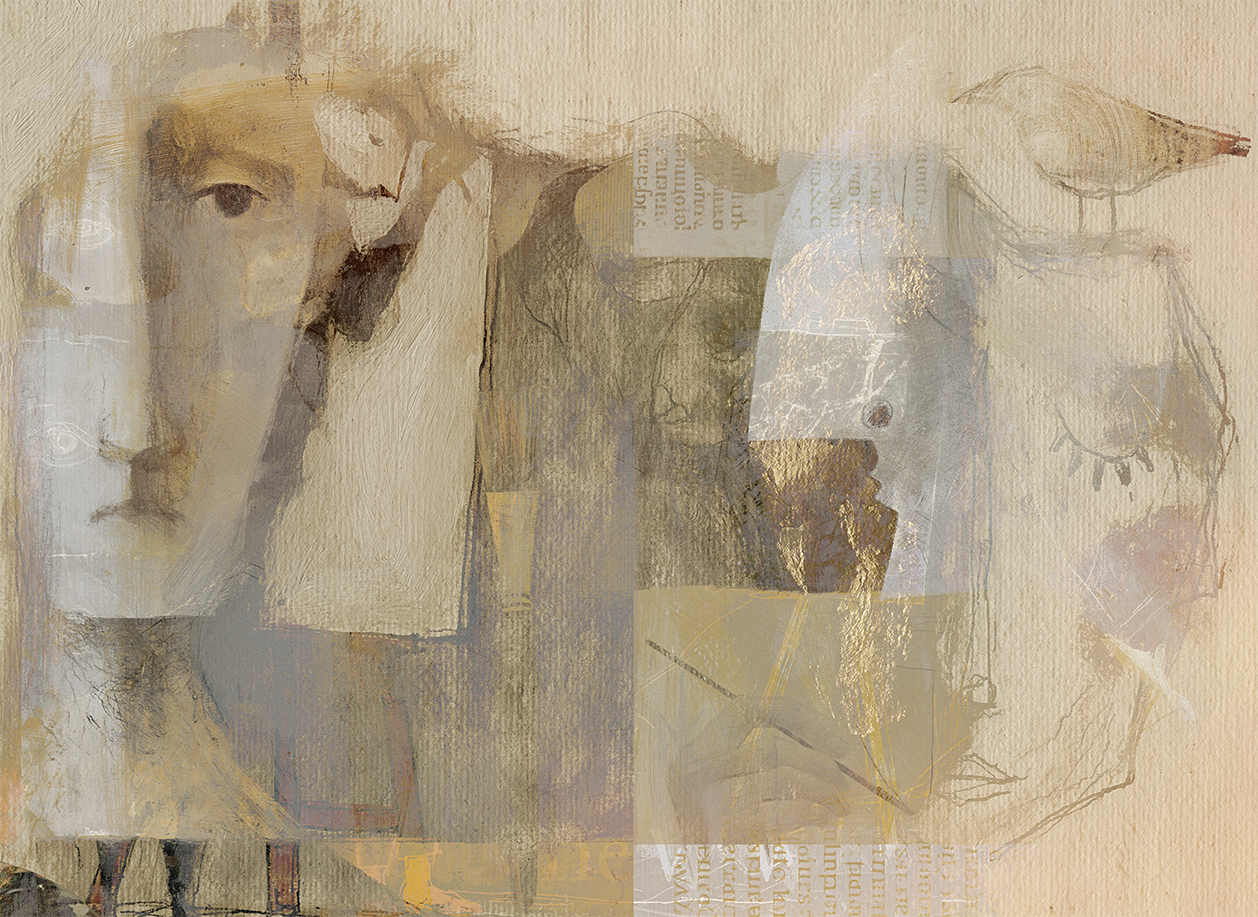
Vuillard asks for something different: we might see the chaos and confusion of a woman in a patterned room. Why shouldn't we try something similar with a camera to see how it works? Consider the strange arrangement of pattern, figure, wallpaper, dress and chair all fighting for our attention. It's not a conventional way to compose an image, and that is precisely the point.
Jazz musicians learn solos from records note by note. They lift the needle, replay the phrase, then do it again until, almost by osmosis, it finds its way into the fingers.
The results will disappoint us – they are bound to. The copy will differ greatly from what we hoped it would be. Of course, our own habits will keep breaking through – our hand moves at its own speed. Our prejudices about colour start getting in the way. Our tolerance for emptiness, clutter, blur, awkwardness, prettiness, drama, restraint etc etc – all of it begins to surface. But don't discard the evidence, nor think the experience is wasted because the variations and the glitches might be more useful than you realise.
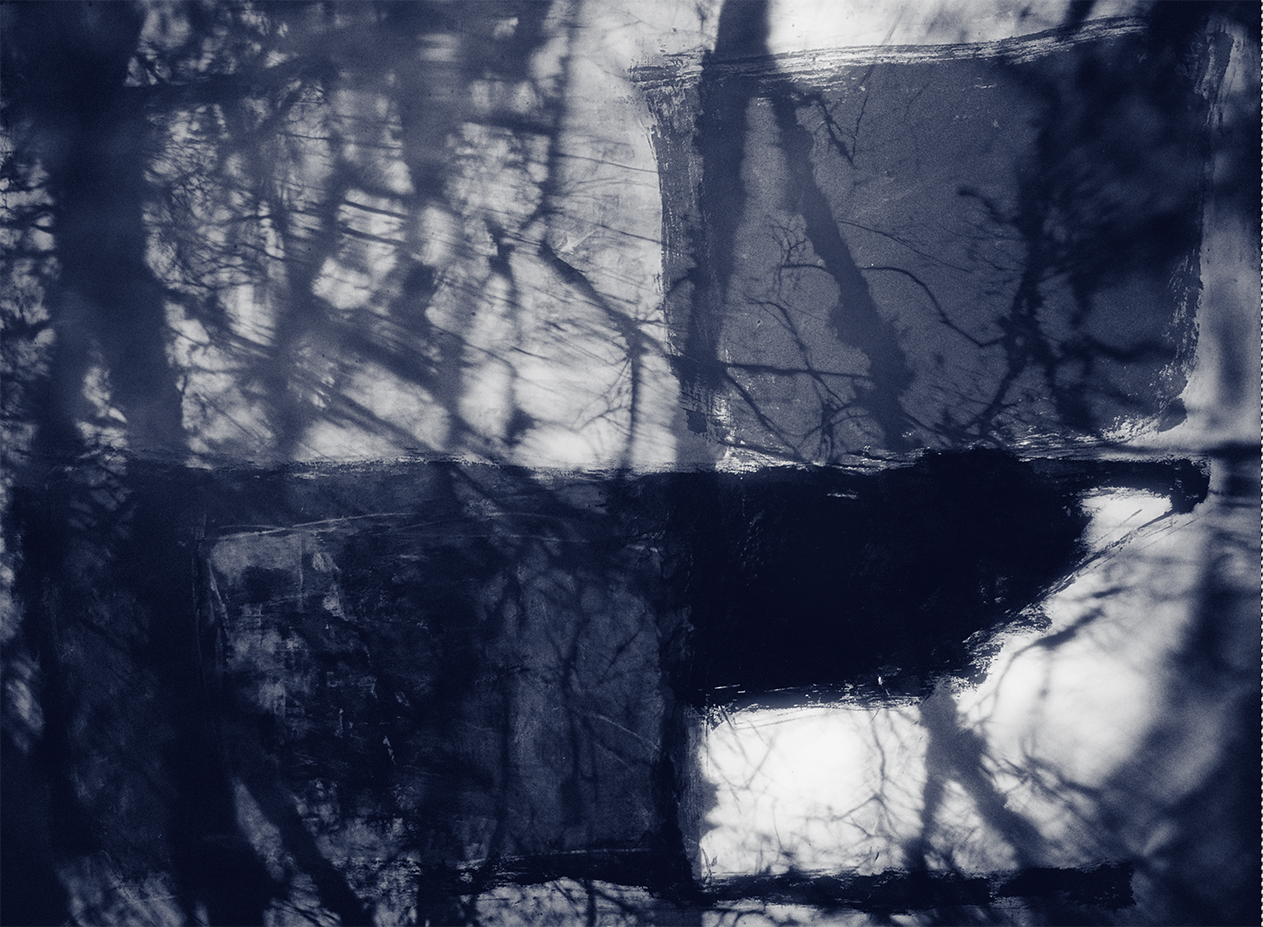
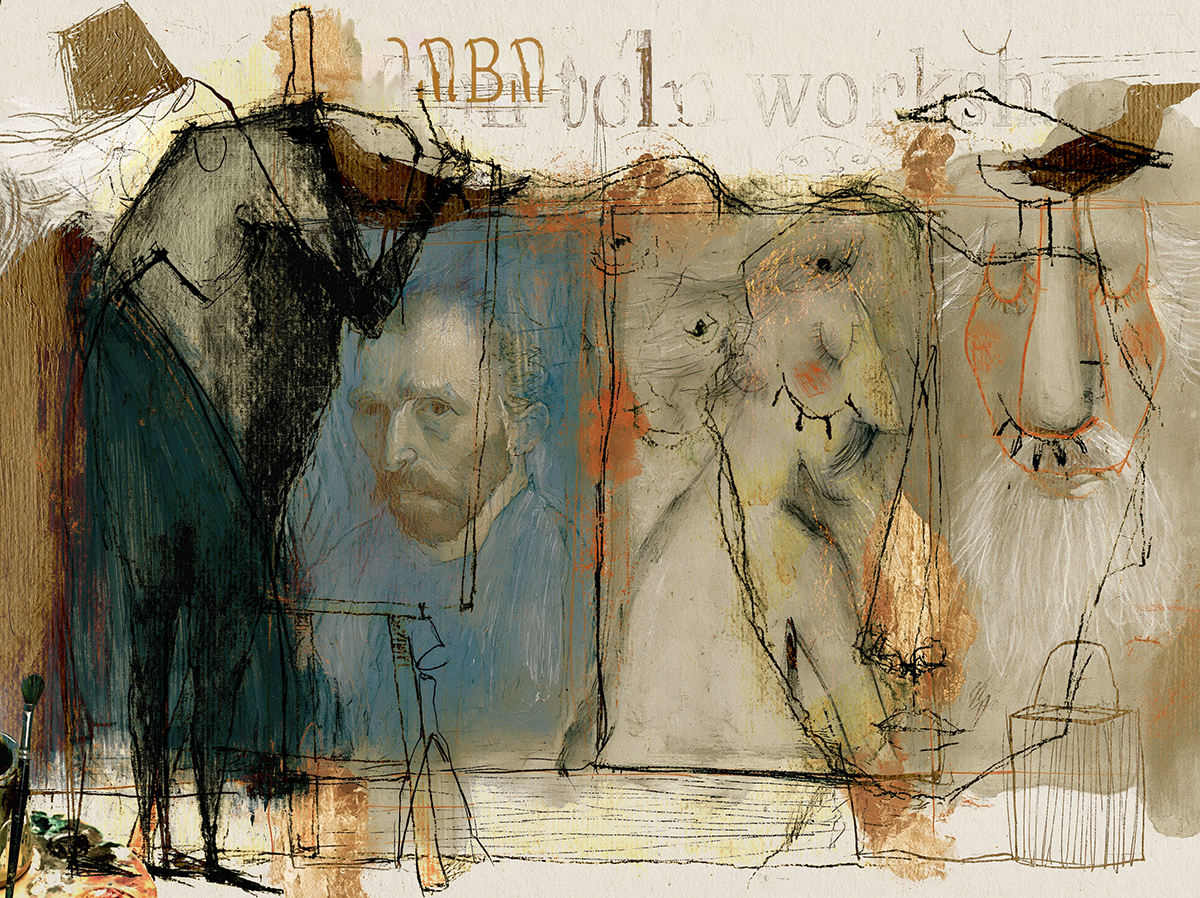
All images (bar the Louvre) are my composites; Lightroom originals + AI 'copying', + Photoshop 'cheating'. Or however you want to spin it.
People talk about finding their own style; making work that is distinctly theirs, but I would venture to suggest that nobody speaks in their own voice until they have borrowed and mangled a few others. We become a mash-up of all we have seen and everything that has influenced us.
A voice is not something you find by focussing intently on it. Try that and it behaves like the morning mist here on the Silver Coast: present one moment, gone the as soon as you think you have nailed it. Voice is what remains after you have tried, sincerely and repeatedly, to be other people, and failed in your own particular fashion.
Perhaps you set out to be Rothko and something stubbornly un-Rothko-like keeps surfacing. That could just be a new voice of your own.
I speak from experience. My own attempts to borrow the weight of Franz Kline have mostly produced tangled black scribbles. My failed scribbles turned out to be instructive because they narrowed the field for me. A couple more options crossed off the list. We set out grandly in pursuit of one idea and maybe all we end up doing is refining the possibilities. Realising who we are not.
Why is it, I wonder, that we treat influence as something to conceal, a debt we hope nobody uncovers? The copyists in the museum do the opposite. They stand in public, in front of the painting, in front of everyone and go about their work.
Perhaps we need to understand that copying, in this sense, is not surreptitiously stealing someone's creative flourish, passing it off as our own and hoping nobody notices; it is an attempt to stand on the shoulders of giants and see where it takes us. And succeed or fail, you have to admit, the view will be pretty good up there.