
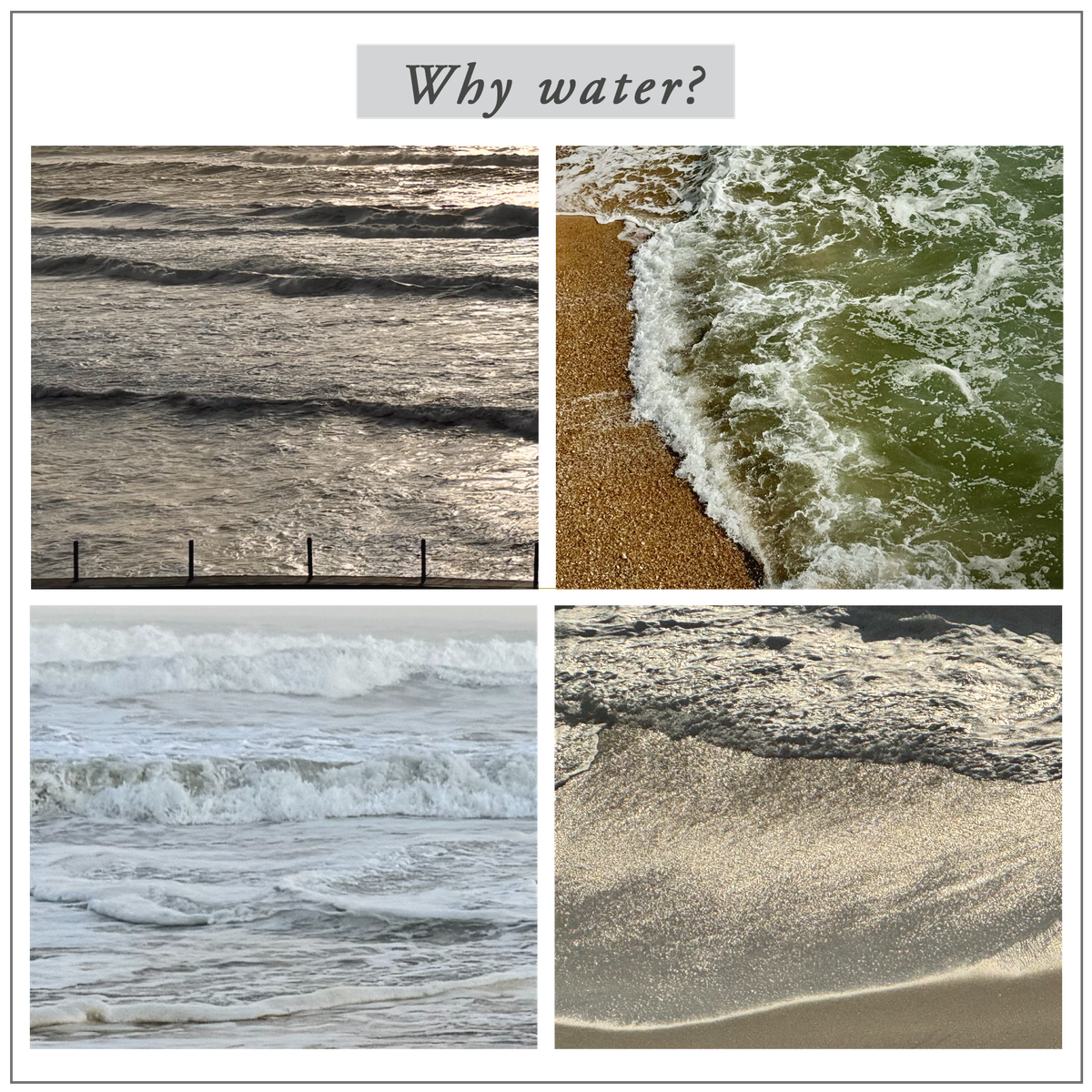
The obvious answer is that water is beautiful, endlessly various, and fiendishly difficult to photograph.
I have spent a great deal of my life looking at water. Mostly as a photographer who wanted to keep it, retain it, hold onto it somehow. I have taken many photographs of the sea, and yet none of them really depicted it. I saw what appeared to be the ocean; however, by the time the shutter opened, it was gone. All I had left was a pretty good arrangement of waves which didn't look much like the thing that initially caught my eye.
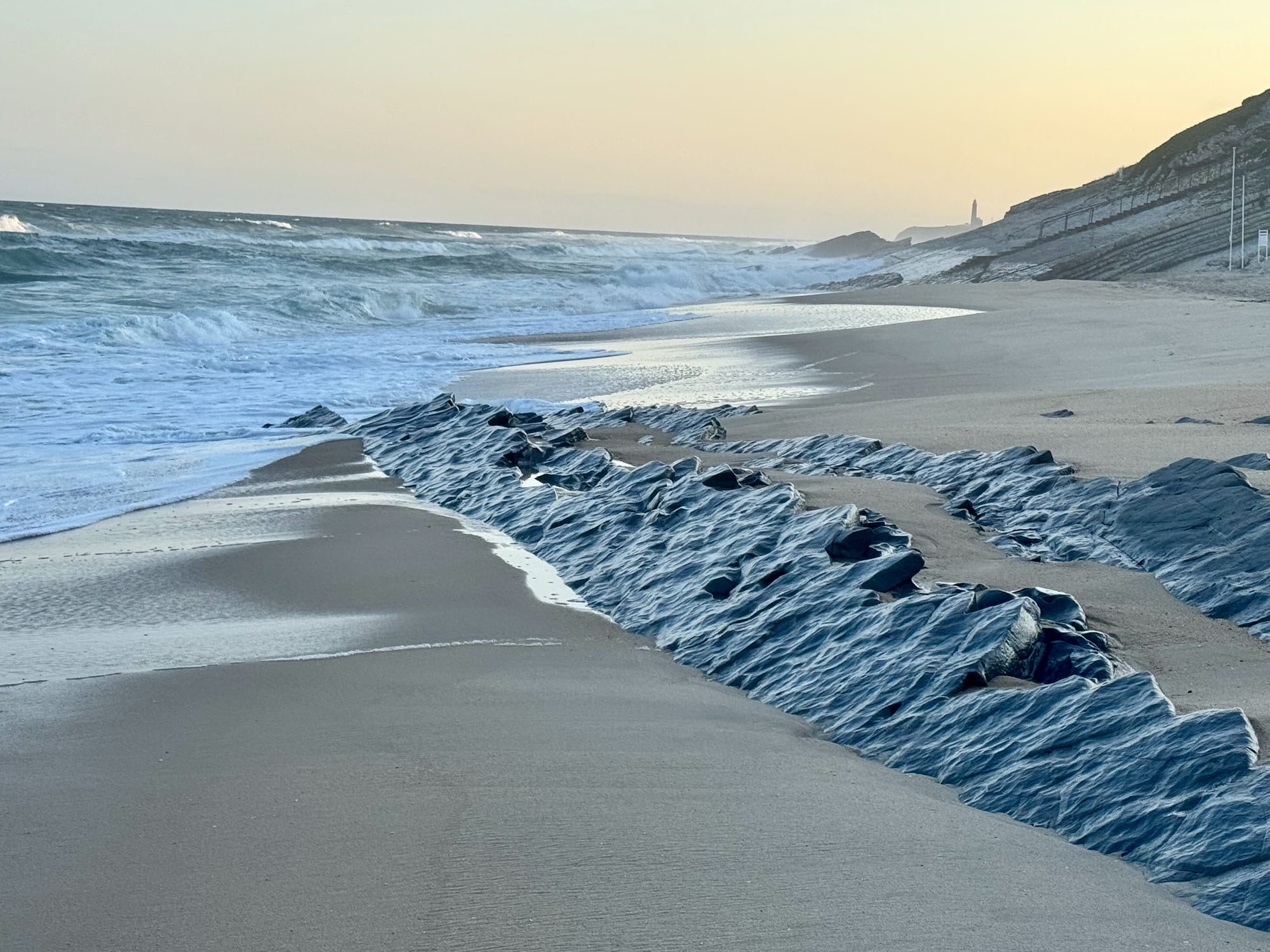
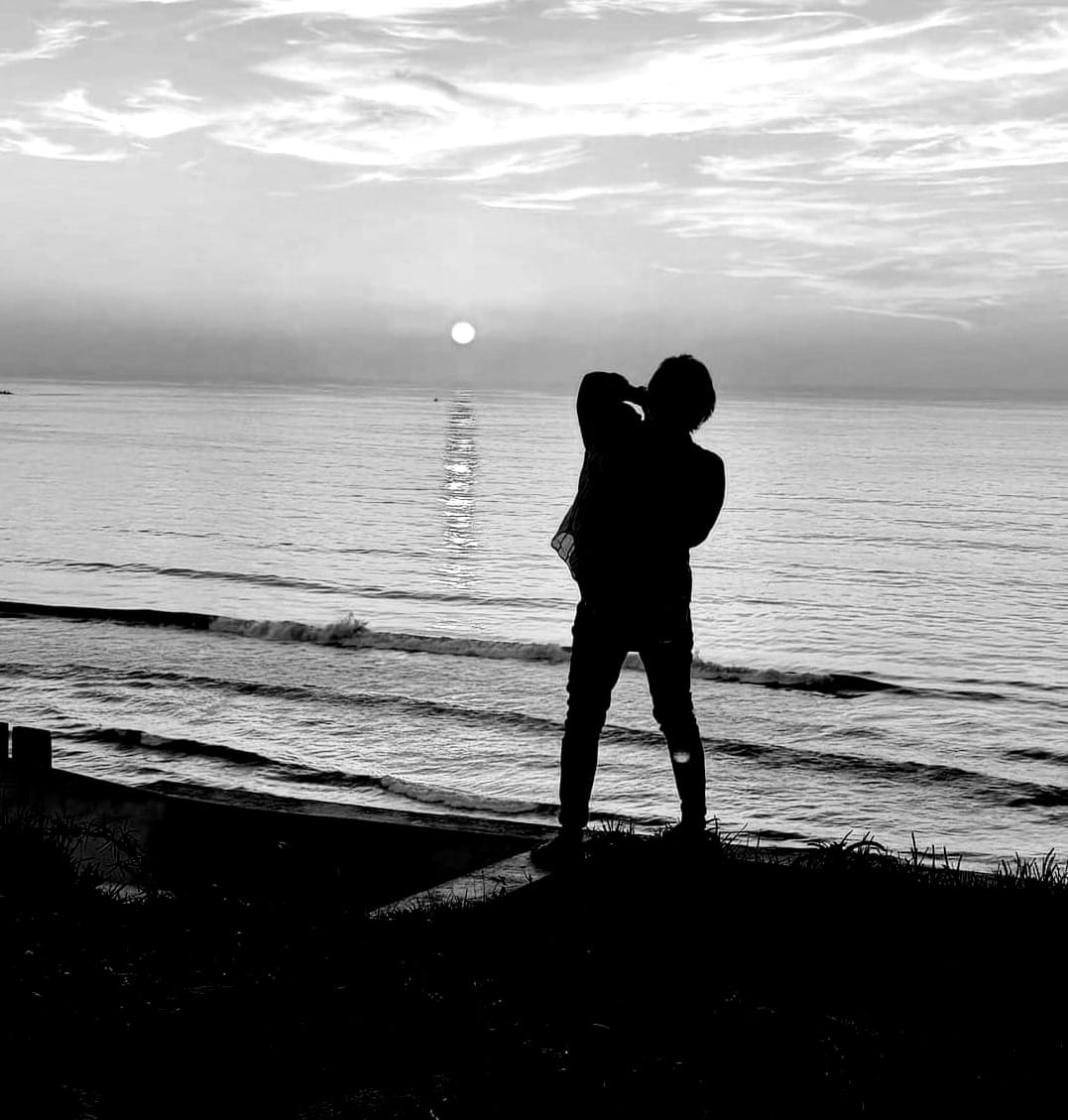
I think the ocean is the subject that defeats the camera most decisively. Much of the photographic instruction offered presumed the world that would remain steady for long enough to organise your thoughts. Locate your subject. Attend to the edges. Wait for the perfect moment. Water laughs in the face of such a methodical approach.
Mountains stay still. Buildings will generally remain exactly where you left them. Water doesn't. It has no inclination to stop long enough for someone to adjust their shutter speed.
Stand on the shore during a sunny day and see if you can determine exactly what you're looking at. The surface of the water? The light sitting on top of the water? The sky reflected on the surface of the water? Or is it the thing that lies beneath the surface? A rock and its reflection may or may not be located on the same plane. Your eyes easily shift back-and-forth between the two as needed. Focusing on one can cause the other to disappear.
Your gaze never settles. The reflection disappears and reappears. As soon as you move just a bit, the entire arrangement is different. The camera freezes this ambiguity and converts it into a single, two-dimensional rectangle. Useful in nearly every situation. Less useful when what intrigued me was the ambiguity itself.
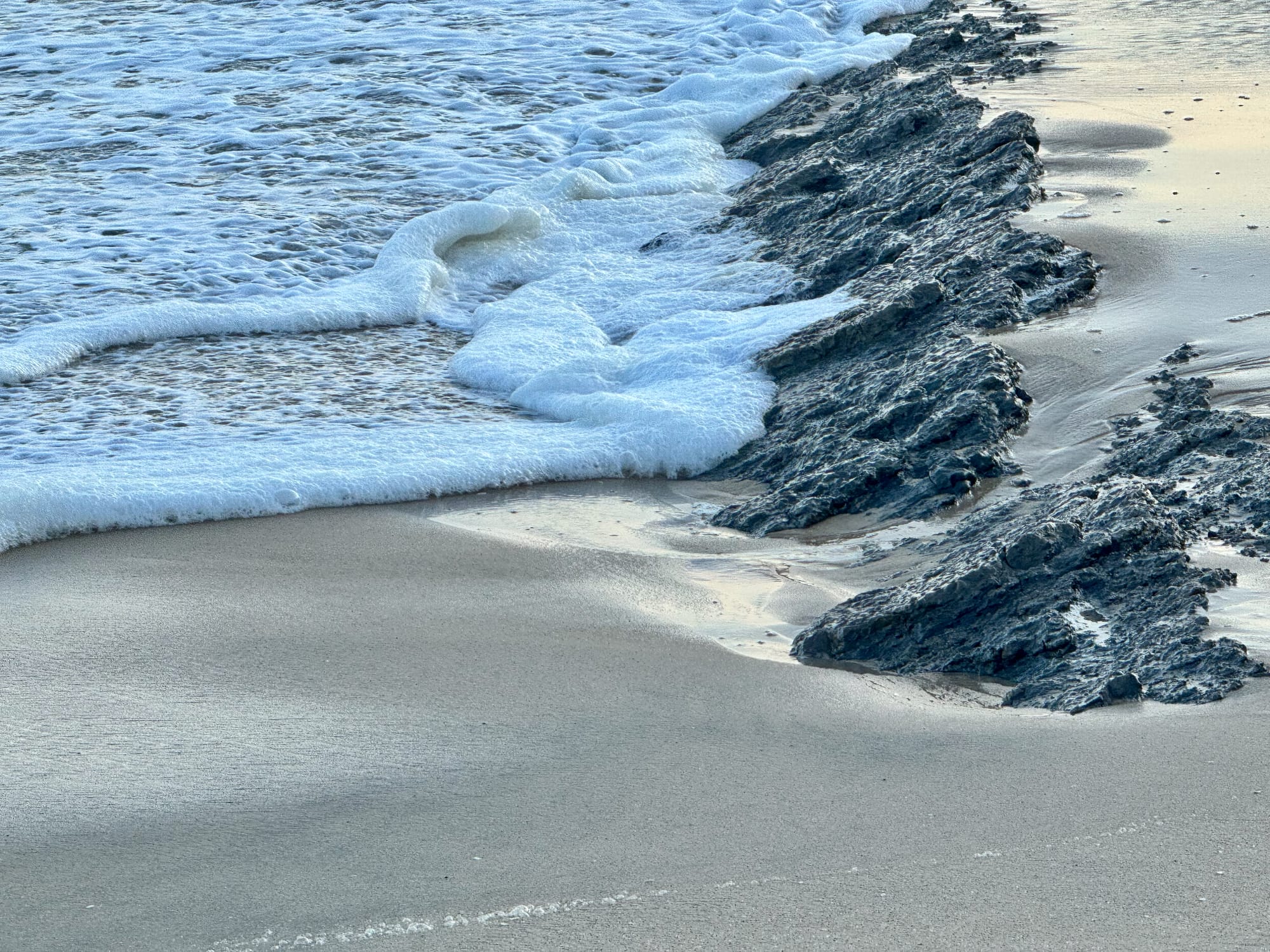
I have spent many years developing a body of work using a camera that refuses to stay still: blurred lenses, layered exposures, etc., all methods developed to address problems such as these. Yet none of them really capture it. They dutifully transform what is received by the sensor into a picture of the sea's restless nature. Except that it's not quite the restless nature of the sea itself. Closer. But still a memento.
I have long since stopped worrying too much about identifying exactly what photograph I am creating in advance. We are taught to compose, consider, cogitate. Find the picture, shoot it, and leave before either the lighting changes, or someone wearing a red jacket walks into the wrong part of the frame. Pre-visualisation - however loose my own engagement with it ever was - doesn't work for me.
What does work is watching. Observing the wind as it etches its mark upon the surface of the water, then instantly removes those marks. Sunlight arriving, and the sea becoming almost white; storm clouds arriving and the colour of the water returning to a dull pewter before I can recognise the change. Undulating swells - how they ascend and descend without breaking, like muscles flexing beneath skin. Foamy tops maintaining their shapes slightly longer than appears sensible; then disappearing under the next wave's arrival.
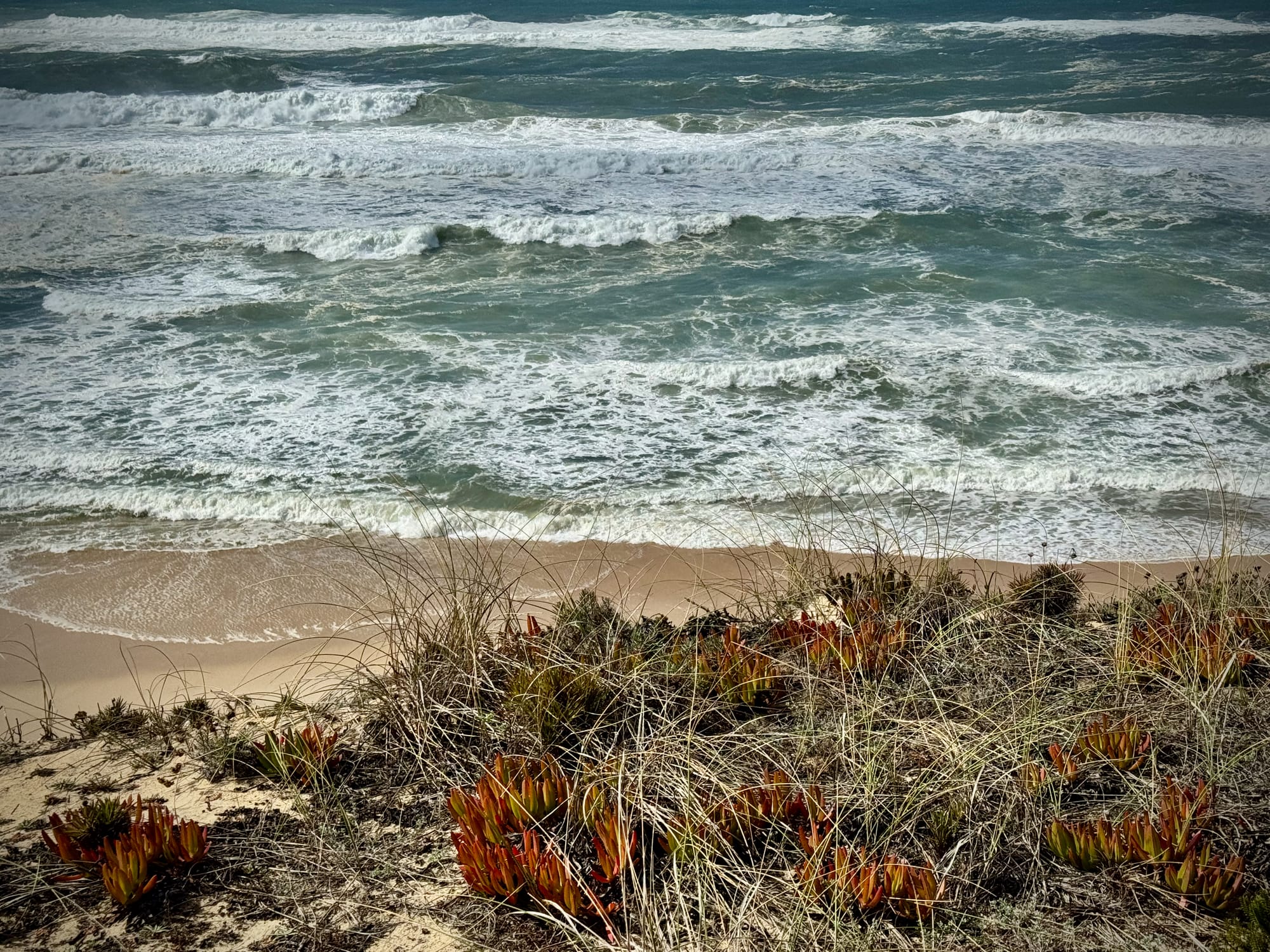
The thing I have been reaching for - an abstracted representation consisting of colour and light with no definite subject matter; all surface area, movement and dissolution - is already present in the water. It is an original abstraction. It represents nothing. I look for the thing I am trying to abstract and see the job is already done.
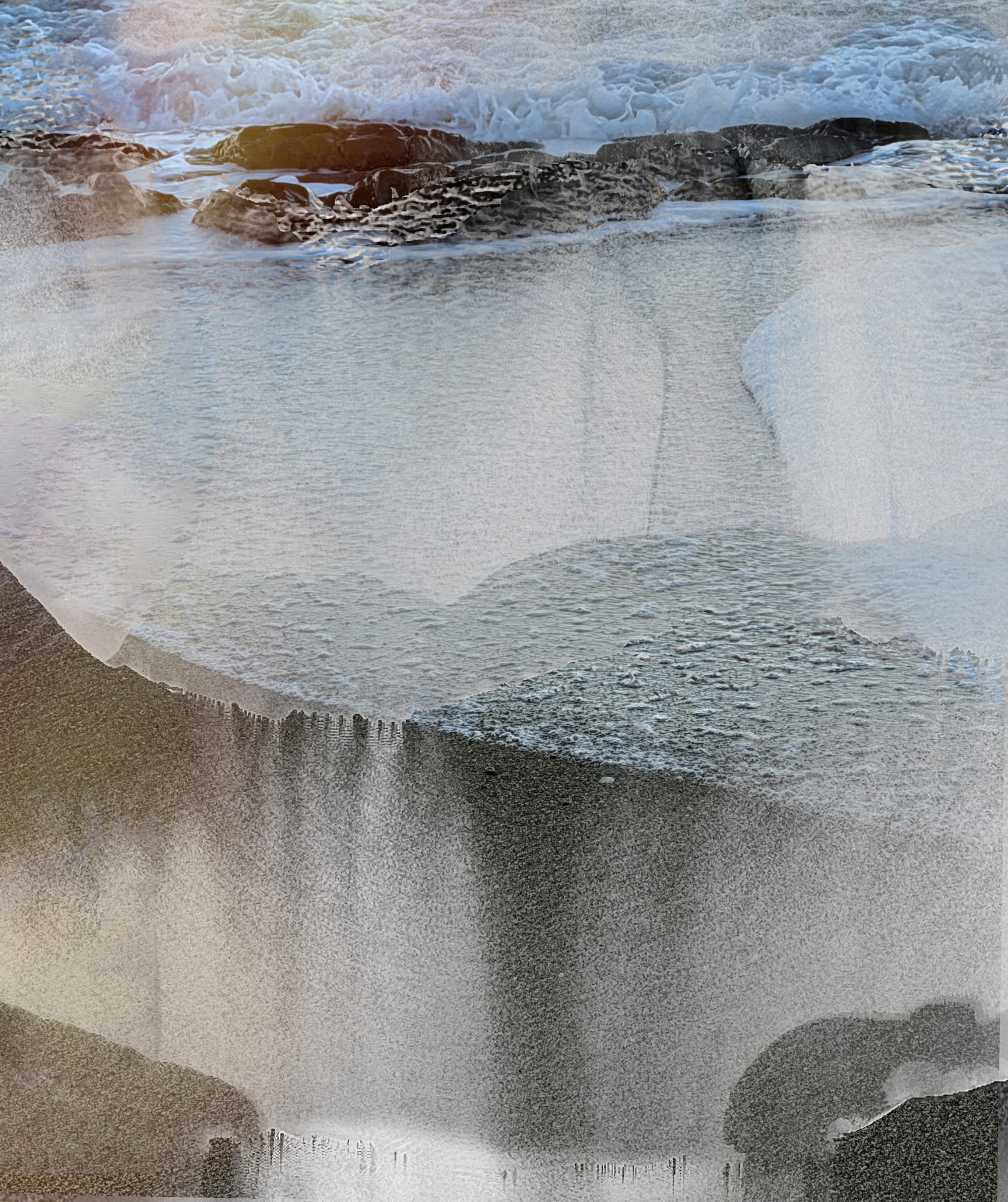
Meanwhile, I settle for merely being present. The surface is constantly in motion, and beneath lies a depth with content that has existed in a state of constant flux long before my arrival; neither content nor process requires witnesses to proceed. I gaze nonetheless. Not to retain it; I have largely relinquished that aim, although not completely. Part of me continues to be five years old, sitting at a painting table, believing with absolute certainty that any new combination of colours will result in an unseen hue. The same part continues to believe that there exists a shutter speed I have yet to test; some nimble manoeuvre in a studio setting that will ultimately allow me to obtain an unbroken shot of the sea.
The image, if one comes, comes afterwards, almost as an afterthought - the residue of having paid attention.